Facts and myths about the Kepler exoplanet cadidates
July 29, 2010
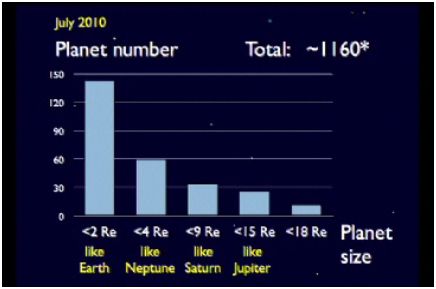
Screenshot from Sasselov's talk
So there’s been a bit of a media buzz lately about the possibility that the Kepler space observatory may have discovered 100’s of earth-like planets orbiting other stars in our galaxy. Recently at a TED talk, one of the chief investigating scientists on the Kepler team, Dr. Dimitar Sasselov, mentioned that the team had found “candidates” for “earth-like” worlds, “that is, having a radius smaller than twice Earth’s radius.” Many mainstream media outlets have twisted this into reports saying that we’ve found 100’s of earth-twins (having an atmosphere, liquid water, etc…) orbiting other stars.
First of all, we HAVE NOT confirmed ANY of these as exoplanets yet. It will take considerable follow-up observations by other telescopes to confirm these as exoplanets, and not glitches or other phenomena that look like a transiting exoplanet. Also, the phrase “earth-like” as he used it simply means that it’s similar in size to earth. Just because an exoplanet is similar in size and composition to earth does not mean it is habitable. In fact, most of the exoplanet candidates have fast orbits and are very close to their parent star (which is why they were detected so quickly). This would make them much more akin to Mercury or Venus- both of which are far too hot to sustain life. The true earth-like exoplanets (that are in the habitable zone, have a similar radius, and could potentially harbor life) will take at least another year to discover, simply because they have longer orbital periods- closer to 1 year. Most of this information was culled from Dr. Sasselov’s NASA blog post in which he clarifies what he was saying in his talk. For even more info, check out Universe Today.
Don’t get me wrong, I’m incredibly excited about this mission, but I’m not going to pop the champagne cork until those scientists issue an official press release saying something like, “YES, we have definitely PROVEN that planet earth is not unique, and our galaxy is filled with small, rocky planets orbiting within the habitable zone of their parent stars.” That is a day I’ve dreamed of ever since I was a little boy fascinated by astronomy programs on the Discovery channel and the X-Files. There has been tons of speculation on this matter, but until now there was no solid, observational evidence to PROVE it.
Static electricity/astronomy updates
January 6, 2010
January is often a time for lots of updates from the world of astronomy, because it’s when the American Astronomical Society has their yearly conference/meeting. This year’s is a big one, with lots of news regarding exoplanets. Unofortunately, no Earth-twins have been found yet but there are some other interesting stories from Kepler and many other sources. Some highlights so far:
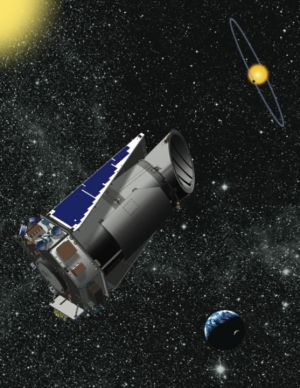 The Kepler mission has found its first batch of exoplanets, all of which are gas giants similar to Jupiter (though one is reportedly more like Neptune) orbiting very close to/quickly around their parent stars. It’ll be a few years before it finds anything else, because anything else takes a lot longer to orbit. Since Kepler is specifically looking for transiting planets (the planet passing directly between its parent star and us) it has to have 3-4 transits to be absolutely sure of its findings. Since planets like ours take a year or more to orbit… well, you do the math. It even found one gas giant that has the same approximate density as sytrofoam. (Via NASA and NewScientist)
Another interesting tidbit to come out this year is a much clearer picture of just how common solar systems like our own are in the universe/galaxy. According to astronomers from Ohio State University, who were heading up a larger collaborative effort called MicroFUN (micro-lensing follow-up network), about 10–15 percent of all stars have planet systems like ours (meaning a few gas giants orbiting far out, with probably a few small, rocky planets in closer). 10-15 percent may seem like a small number, but when you consider the overall vast number of stars just in our own galaxy alone, you’ll realize that even 10 percent equals hundreds of millions of solar systems. It should be quite obvious now that there are other worlds out there very similar to our own, we just haven’t found solid evidence of them yet, so we can’t be 100% sure. But I am confident the Kepler, the CoRoT mission, or maybe even a ground-based telescope, will find one within the next decade. (Via EurekAlert! and Space.com)
Here’s a little bit of everyday science for you:
We’ve all been annoyed when we get out of our cars or walk across a carpeted room in the winter time and shock the #&*$@! out of ourselves on the door/other metallic object. So why the hell does it always happen so much more in the winter? It has to do with the humidity. Especially in the eastern US, the winter months are much MUCH drier than the summer ones. (Remember that Relative Humidity is NOT a direct measurement of how much moisture is actually in the atmosphere, go by the dewpoint- the lower the dewpoint, the less moisture is in the air.) Colder air has less moisture capacity than does warmer air, thus the winter months are very dry. Well all know that static electricity is the buildup of an electric charge in our bodies and/or clothes due to simple friction. During the summer months when the air is more humid, the moisture in the air allows those charges to constantly dissipate because we all know water is a good conductor of electricity. The static electric charge never has a chance to build up because it’s constantly “seeping” away into the moist air. In the winter, the dry air does not conduct and “seep” away the static electric charge, allowing it to build up until we reach for something metallic such as a doorknob and POW! the electricity instantly discharges in one big spark and we get shocked.
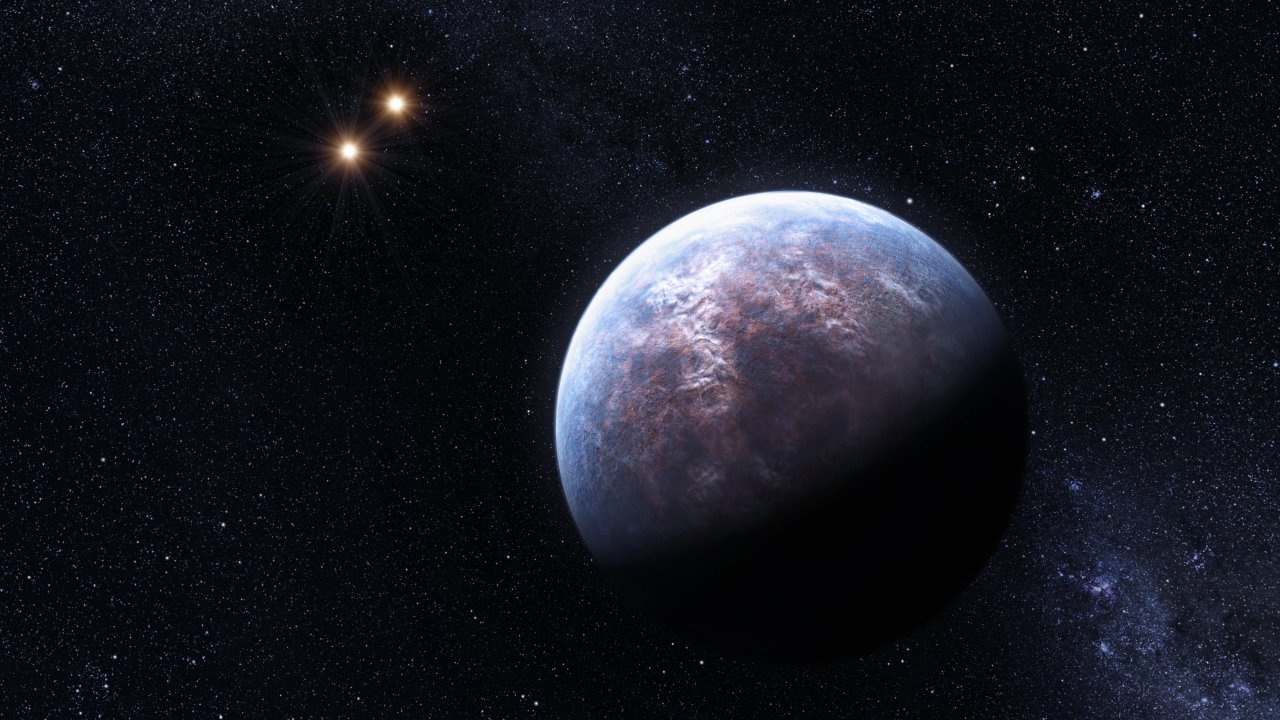 The floodgates of exoplanet discovery just opened. The High-Accuracy Radial Velocity Planet Searcher (known as HARPS) discovered a batch of 32 new exoplanets, pushing the list of known exoplanets to over 400. Most of these are low-mass planets about the size of Neptune. Since HARPS (which is a spectrograph) works with a land-based telescope which has to put up with the distortions and aberrations of the Earth’s atmosphere, that’s a very impressive feat. It shows just how good astronomers are getting at planet-hunting, and with the recently-deployed Kepler space observatory working like a charm, it won’t be long before we find the jackpot of astronomy to date: an Earth-like planet orbiting a distant star. (Via Universe Today)
I’ve mentioned that new theories challenging the textbook theory of a massive asteroid impact in Mexico killing off the dinosaurs are gaining serious momentum in the field of paleontology. The main challenge to the impact theory is the one involving a massive, long-erupting supervolcano in India known as the Deccan Traps. India has coughed up yet another, 3rd challenge to the impact theory: an impact event of its own. Some researchers from Texas Tech University think that a huge depression that exists beneath part of the Indian Ocean is actually an impact crater, and that it’s the result of an asteroid that smacked into the earth near the time the dinosaurs went extinct. (In geologic terms “near” actually means within a few million years…) If this turns out to be a true crater, and not just the result of normal tectonic plate movements or volcanic activity, then I’d say it definitely had at least some effect on the dinosaurs, and probably some effect on the ongoing eruption of the Deccan Traps. (Also via Universe Today)
NASA rolled out the first full sized test vehicle for its new Constellation program earlier this week. The Ares I-X was rolled out to launch pad 39B for its scheduled test flight next week on Oct. 27th. This is a full-scale mock-up of the Ares I, which (if the current plan is adhered to) will replace the Space Shuttle as NASA’s method of delivering astronauts to and from low Earth orbit. The test flight, of course, will be unmanned. Here’s a pic via NASA’s website. Keep up with the test launch at the launch blog. The new rocket is 327 feet tall, over 100 feet taller than the Space Shuttle.

Click to enlarge
Rocky exoplanet confirmed/nerd Venn diagram
September 17, 2009

Image Via Space.com
A European satellite observatory recently discovered a very small exoplanet that is said to be the first with a proven density similar to Earth’s. Follow-up observations were done at a telescope in Chile to determine the planet’s mass, which was then combined with its radius to calculate its density. The planet has about 5 times Earth’s mass. But don’t get too excited just yet- the planet is far from habitable. It orbits VERY close to its parent star (23 times closer than Mercury is to our Sun), which not only means it’s really effin’ hot, but it also is probably tidally locked, which means the same side of the planet is always facing the star. So one side is literally boiling with molten rock, and the other side is extremely cold. There’s no way it could have any atmosphere, either. BUT this is still an important step toward finding an Earth-twin. No we know that we can find planets similar in size and density to our own. It’s just a matter of time until Kepler or CoRoT finds one orbiting in its star’s habitable zone. (Via Space.com)
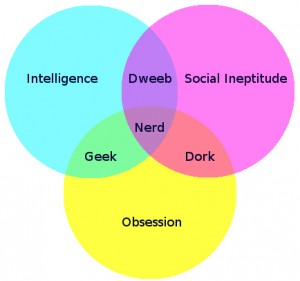
Ever wondered about the difference between a nerd, a geek, a dweeb, and dork? Look no further. This pretty much nails it down perfectly. (Via Clusterflock)
Kepler’s first images/Green rooftops/hipster grifter
April 17, 2009

Image via Space.com
The Kepler spacecraft took its first few images earlier this week, and NASA has released them. The one shown here is zoomed in on a small cluster of stars about 13,000 light years from Earth. Kepler has a 95 megapixel camera to take these images. 95 megapixels. Fuck.
An awesome new concept is emerging in some of the world’s largest cities- green rooftops. It’s a concept that I sincerely hope catches on quickly. Typical building rooftops are dark and dry; they absorb and then release much more heat than a natural plant-covered surface would, and the result is what’s called the “heat-island effect.” This phenomenon is what causes some large cities to be a few degrees hotter than the surrounding areas, and it’s a growing problem. But if we cover most of the city rooftops with gardens and grass, this problem would be virtually eliminated. Please check out this National Geographic article on the subject… not only for the story but for the awesome photography.
Will humans ever be able to travel beyond our solar system? Or will we just resort to armchair astronomy and send an army of intelligent robots to other worlds to explore them for us? The question is tackled in this great article by Luke McKinney from the Daily Galaxy. It’s a short and entertaining read, as all of McKinney’s witty posts tend to be.
The new Harry Potter movie comes out July 15th, and the trailer has just hit the interwebs. I first saw it on this io9 post.
Carles of Hipster Runoff had an encounter with the now somewhat-famous hipster grifter, who brought her cancer/pregnant/sex fraud scheme from Salt Lake City to Brooklyn scammed quite a few hipsters out of a lot of money.
As I said yesterday, I’ll be photographing Rites of Spring this weekend, but there’s also a TON of other great stuff going down, most notably National Record Store Day on Saturday, for which Grimey’s is hosting their Big Ass Outdoor Sale. Be sure to stop by between 10am-8pm and check out the great record deals and live music out in the parking lot. A list of some other stuff happening can be found at Nashvillest. Have a great weekend!
 I’m a little behind in posting this, but if you haven’t been to We Own This Town in a while, I highly suggest you head over and check it out. Joe Baine Colvert and Michael Eades (aka Yewknee) have been doing a great job of keeping it updated and active (especially the show listings). They have a new podcast featuring all artists from Theory 8’s roster, including some yet-to-be released material. Good times for all!
Some other exciting news recently posted on WOTT- The Features have a song in a trailer for the new Mike Judge film Extract, slated to release this fall. It’s got a pretty star-studded lineup, too- including Ben Affleck, Mila Kunis, Jason Bateman, and J.K. Simmons. Watch the trailer. Let’s hope they actually end up in the soundtrack!
Nashvillest has a really nice post about dining out on the cheap in Nashville. Nice work, ladies! They also posted a link to a City Paper story about a new local law being proposed that would hold venues directly responsible for illegally posted concert fliers. This has to be the most RIDICULOUS idea I’ve ever heard. We already know it’s technically illegal to post fliers on telephone poles/light poles/any pulblic property. But nobody gives a shit because it’s impossible to enforce unless a cop actually sees someone doing it. But fining a venue because some band’s fanclub posts fliers for their upcoming show? How on EARTH could a venue possibly control this kind of thing? That’s right, NEVER. It’s IMPOSSIBLE for them to do such a thing. They can’t cancel the show (as some dumbass commenter on the City Paper story suggests), what good does that do anyone? The shows are the venue’s business! Futhermore, the bands will be pissed, especially if they’re a touring band, because once again, playing shows is their business. They make their money from it. Then no bands will ever want to play there, thus the venue ends up closing and the whole live music process just implodes. I guess if you want to take the “Music” out of “Music City,” go right ahead and pass this. I have a suggestion for Mr. Tygard- WAIT. It’s quite clear that the internet is becoming a far easier and cheaper way to promote concerts, and that means less and less printed fliers. It’s only a matter of time before this very MINOR problem fixes itself.
Off the soapbox, onto some more interesting stuff…
Hipster Runoff examines Billy Corgan and Tila Tequila.
Remember Line Rider? Well if you enjoyed that, you’ll want to check out BallDroppings. Just go try it. Absolutely addictive and it could easily consume hours of your day if you aren’t careful. Don’t say I didn’t warn you! Via Yewnkee’d.
Just one science-related tidbit for the day- the Kepler space telescope popped its lid and is now starting to look for earth-like worlds orbiting other stars! That was the last major milestone in the mission, aside from when it eventually does discover the first earth-like exoplanet. Go Kepler!
I’ll leave you today with this awesome Man Man video featuring my favorite SNL cast member Fred Armisen. Werewolves!
Kepler mission launch a success!
March 7, 2009
Just a quick weekend update: NASA’s Kepler Mission launched successfully last night aboard a Boeing Delta II rocket! It’s now headed toward its final orbit where it will trail earth’s path around the sun hunting for other worlds like our own. Read full details at Universe Today. Happy Hunting!

 steve cross loves music and science