NASA/Obama look to cancel Constellation program
February 1, 2010
As expected, today Obama submitted his budget proposal for NASA, which includes cutting the Constellation/Ares rocket program. Under the new plan, he wants to pursue commercial options for getting people to low-earth orbit, and focus NASA’s main efforts on exploring the rest of the solar system. This will no doubt meet some resistance in Congress and the Senate, but overall I think it will go through. I’m starting to agree with it more and more. The biggest reason is that companies like SpaceX will probably be capable of safely transporting our astronauts to the ISS much sooner than NASA’s Ares rockets could have (without a massive and utterly impossible funding boost). Read more details at Space.com and at Discovery news.
Now enjoy these two nice nuggets via yewknee’d:
Sky:
Snowpocalypse: Part Duex/NASA rumors
January 28, 2010
Here we go again. I recommend investing in Kroger stock this year, because they’re gonna get a big boost in sales in TN from all these “snowstorms” wherein a meteorologist utters the word “snow” and 75% of the population immediately clears the milk, bread, and egg isles. (Apparently people only eat french toast during snowstorms?) As usual, I’ve been monitoring the progress of the forecast and find it interesting that the NWS hasn’t issued the winter storm warning yet, only a watch. I’m sure the warning will come, but it’s kinda funny that they’re hesitating, no doubt because of the giant snow fail from a few weeks ago. (To be fair, some areas around the midstate did get something close to the forecasted amounts, though no one really got the full 2-3 inches that was initially forecast…) This system is a little different than the last one, however. This one will most definitely have enough moisture to generate the 3-5 inches, unlike the last system which had moisture “issues.” The big limiting factor with this system will instead be temperatures. Nashville will literally be right on the dividing line between having an ice/rain mix and having an all snow event. If this system decides to track just 50 to 100 miles further north than the models think it will, that will cause more warm air to advect farther north, and we’ll end up having mostly rain friday changing to a little snow on the backside fri. night into sat. morning. If it decides to track slightly further south, we’ll have all snow, but much less of it, and areas to the south of us could actually see more snow than Nashville does. This system has a little better chance of “success” in giving us a good ol’ fashioned snowfall than the last one, but I wouldn’t place any bets yet.

Big rumors abound in the blogosphere about Obama’s budget proposal due to land in Congress on Monday. The biggest rumor is that it will completely cutout NASA’s Constellation program, which is the rocket system currently under development to not only replace the Space Shuttle, but also put men back on the Moon. I reported many times on the progress of the Augustine Commission and its recommendations for how NASA should proceed given that its current “trajectory” was financially unsustainable. One of the options they proposed was to eliminate the Constellation program and let commercial spaceflight companies like SpaceX takeover the duties of getting astronauts to the International Space Station and other low-earth orbit missions. I have a feeling that if the budget really does cut the Constellation funds, that’s where we’ll be headed next. Honestly I think it may not be a bad idea, because it would allow NASA to focus more on getting man further out into the solar system, and eventually to Mars. I tend to agree with Dr. Phil Plait’s (the Bad Astronomer) sentiments on the issue (as usual) but I’m not in total agreement with him that we should still go back to the moon. But then again, he’s the astronomer with a Ph.D and I’m not. For even more info, check out Universe Today. Check those blogs again on Monday afternoon, as I’d say they’ll be able to update waaaay sooner than I will once the actual budget info is released.
Bizarre balloon-rocket moon mission/Gibson gets raided by the Feds
November 18, 2009
Two cool things come your way via Universe Today today:
Apparently a Romanian group is competing for the Google Lunar X-prize with a bizarre balloon-rocket combination. They have a nice animation video in the post that explains the design far better than I could with word, so just check it out for yourself. I never thought I’d see helium balloons involved in a project where getting to the moon is the final goal… It’s one of those things that’s mind-numbingly simple and you say “why did no one think of this before?”
Also from UT is this cool HD video of Space Shuttle Atlantis blasting off on Monday. The shuttle docked today with the ISS.
Regarding the Feds’ raid of Gibson HQ yesterday: (FYI- it wasn’t the FBI, it was the Fish & Wildlife Agency that raided them…)

Via Hartley
Science tidbits: Mystery of the Pyramids/NASA gets Augustine report
October 27, 2009
 In addition to being a totally awesome sight to behold, the famous pyramids of Giza in Egypt have also been a bit of a mystery. Scientists and archaeologists had a hard time explaining exactly how they were built given the technological limitations of the time period. The Pharaohs had a massive army of laborers at their disposal, but carving those massive blocks out of stone and moving them over miles of scorching desert would seem to be an insurmountable task even for an army of men. I was intrigued when I stumbled across the work of Dr. Joseph Davidovits, who claims that the stones were actually cast from a type of limestone concrete. This method would’ve require FAR less man-power and makes the pyramids’ construction seem much more reasonable. The seemingly impossible construction of the pyramids has fueled some ridiculous crackpot ideas that aliens helped build them. I was very glad to see that real science has actually explained the mystery of their construction quite well. Science wins. As always. Read more about his book Why the Pharaohs built the Pyramids with fake stones on the website of the Geopolymer institute.
This morning NASA attempted to launch the Ares I-X, the very first full-scale test version of their new Ares I rocket, which (if NASA proceeds on the current path) will replace the space shuttle as our primary means of transporting astronauts to low earth orbit. But a series of silly issues such as a probe cover getting stuck and a cargo ship accidentally entering the danger zone, combined with bad weather caused the launch to be delayed… possibly until tomorrow, maybe later.
Speaking of NASA… last week they got the full, detailed report from the Augustine Commission, which is a group of aerospace industry experts put together earlier this year by the Obama Administration to assess the state of manned spaceflight within NASA. Basically it’s a more fleshed-out, complete version of the preliminary report I mentioned several weeks ago on this blog. It’ll be interesting to see which solution NASA administrator Charles Bolden and the Obama Administration decide to go with. Personally, I’d like to see NASA get that additional 3 billion they need, but who knows? I can’t really summarize the options any better than Universe Today did last week when they reported on this, so I’ll just quote:
1. Maintain all programs as is, but extend the space shuttle program to 2011 and ISS to 2020. Without extra funding, the Ares rockets wouldn’t be ready until 2020 and there would never be enough money to go to the Moon.
2. Maintain current funding, scrap Ares I, develop an Ares V lite version (about 2/3 of Ares V heavy) and divert extra funds to ISS for extension to 2020. Buy commercial LEO human space flight. The Ares might be ready by 2025, and perhaps get to the Moon after 2030.
3. Add $3 billion per year and proceed with the Constellation program to return to the Moon. The ISS would have to be de-orbited in 2016 to allow a return to the Moon by about 2025.
4. Add $3 billion per year. Extend the ISS to 2020 and get to the Moon by about 2025. Use either Ares V Lite, or Shuttle-C for heavy lift.
5. Add $3 billion per year. Extend the shuttle program to 2011 and extend ISS to 2020. Instead of heading to land on the Moon, orbit the Moon, or go to Near Earth Objects and prepare to go to Mars. Use either Ares V Lite; a heavy Evolved Expendable Launch Vehicles (EELV) or, a shuttle-derivative.
So there you have it.
Yesterday some news outlets reported on a possible crater in Latvia left by a large meteorite impact. Well, it’s been confirmed as a FAKE, so don’t let anyone tell you otherwise. Some Latvians must’ve had waaay too much time on their hands because after detailed inspection, shovel marks could be seen on the edge of the hole. I won’t spend too much time explaining all the obvious scientific inconsistencies because Dr. Phil Plait has done a thorough job of it at his blog Bad Astronomy. The biggest misconception about meteorites is that all of them cause a crater if they make it all the way to the ground- they don’t. In fact most that do hit the ground are less than a meter in diameter and actually are cold by the time they reach it. They also are traveling at normal terminal velocity and just hit with a non-crater-causing thud.
Finally, I’m really happy to see that the Large Hadron Collider repairs came along nicely and they’ve started inserting particles into loop. No actual collisions yet, but if all goes as planned they should be doing their first ones next month. Follow CERN on Twitter for updates.
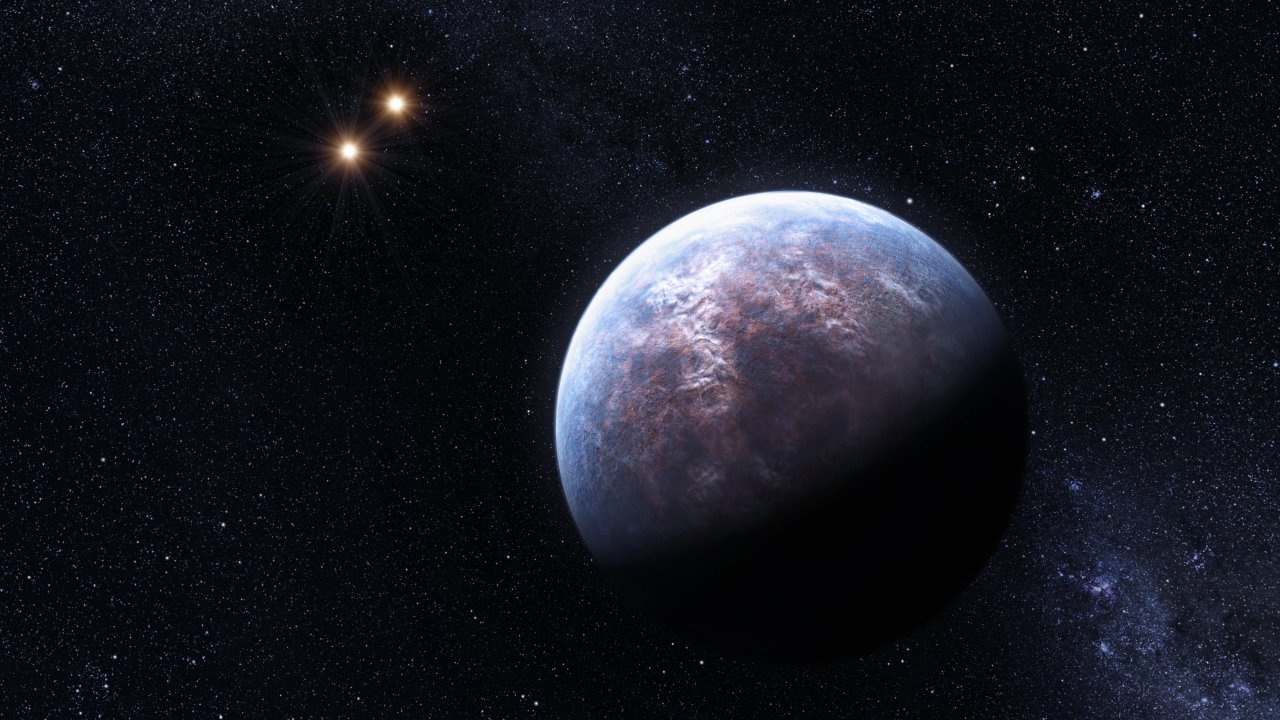 The floodgates of exoplanet discovery just opened. The High-Accuracy Radial Velocity Planet Searcher (known as HARPS) discovered a batch of 32 new exoplanets, pushing the list of known exoplanets to over 400. Most of these are low-mass planets about the size of Neptune. Since HARPS (which is a spectrograph) works with a land-based telescope which has to put up with the distortions and aberrations of the Earth’s atmosphere, that’s a very impressive feat. It shows just how good astronomers are getting at planet-hunting, and with the recently-deployed Kepler space observatory working like a charm, it won’t be long before we find the jackpot of astronomy to date: an Earth-like planet orbiting a distant star. (Via Universe Today)
I’ve mentioned that new theories challenging the textbook theory of a massive asteroid impact in Mexico killing off the dinosaurs are gaining serious momentum in the field of paleontology. The main challenge to the impact theory is the one involving a massive, long-erupting supervolcano in India known as the Deccan Traps. India has coughed up yet another, 3rd challenge to the impact theory: an impact event of its own. Some researchers from Texas Tech University think that a huge depression that exists beneath part of the Indian Ocean is actually an impact crater, and that it’s the result of an asteroid that smacked into the earth near the time the dinosaurs went extinct. (In geologic terms “near” actually means within a few million years…) If this turns out to be a true crater, and not just the result of normal tectonic plate movements or volcanic activity, then I’d say it definitely had at least some effect on the dinosaurs, and probably some effect on the ongoing eruption of the Deccan Traps. (Also via Universe Today)
NASA rolled out the first full sized test vehicle for its new Constellation program earlier this week. The Ares I-X was rolled out to launch pad 39B for its scheduled test flight next week on Oct. 27th. This is a full-scale mock-up of the Ares I, which (if the current plan is adhered to) will replace the Space Shuttle as NASA’s method of delivering astronauts to and from low Earth orbit. The test flight, of course, will be unmanned. Here’s a pic via NASA’s website. Keep up with the test launch at the launch blog. The new rocket is 327 feet tall, over 100 feet taller than the Space Shuttle.

Click to enlarge
Chicxulub challenges/rocket fuel made of ice/eclectic astronauts
August 24, 2009
 The theory that the dinosaurs were wiped out from an asteroid impact near the modern-day Yucatan Peninsula is beginning to face major challenges. There’s no doubt that a huge impact caused the Chicxculub Crater, but some recent findings suggest that the impact may have occurred some 300,000 years earlier than originally thought. This comes as a second blow to the impact theory, with the first being the discovery/dating of the Deccan Traps in India. This gigantic volcanic feature is the result of a huge eruption that is believed to have lasted around 30,000 years. Can you imagine a massive volcano erupting for 30,000 years and covering an area equivalent to 1/2 of modern India with lava? Trust me, something on that scale is hard for the human mind to comprehend, but that much volcanic ash and gas in the atmosphere would’ve had a devastating effect on the ecosystem, and almost certainly played a major role in the extinction of the dinosaurs. Get ready for science textbooks to be re-written, because the asteroid impact theory is about to see the same fate as the dinosaurs themselves. (Via Daily Galaxy)
NASA recently teamed up with the Air Force Office of Scientific Research to test a new, Earth-friendly type of solid rocket fuel. I’m not exactly sure of the details, but somehow they’ve managed to make rocket fuel out of aluminum powder and ice. Yes ice… as in frozen water. The secret apparently is that the aluminum powder is so finely ground that it’s considered “nanoscale.” The nanoscale aluminum has so much surface area in contact with the water ice that the exothermic reaction when it burns is more efficient than normal solid rocket fuel, which is usually powdered aluminum (not nanoscale) mixed with an oxidizer such as ammonium perchlorate and a binding agent. Seriously though, who would’ve ever thought you could make rocket fuel out of ice and aluminum? It just sounds crazy, but it’s true. (Via EurekAlert)
When you think of the type of person who becomes an astronaut, you don’t typically think of race car drivers or musicians, but two of the astronauts about to launch on Space Shuttle Discovery tomorrow morning are just that- a former off-road truck racer and a drummer. Check out this Space.com article to find out more about Commander Rick Struckrow, formerly a Baja off-road race driver, Pilot Kevin Ford who is also a drummer, and several other astronauts who come from surprising backgrounds.
Ares I-X/Man-made Auroras
August 5, 2009

Image Via Universe Today
NASA is assembling the Ares I-X rocket currently in the the Vehicle Assembly Building at the Kenndey Space Center. This rocket is a test version for the Ares I which, under the current plan, will eventually take astronauts to the ISS and moon. They plan to do the test flight on Oct. 31st of this year. However, Obama’s Augustine Commission is currently reviewing the direction of NASA and could come out with a report that recommends scrapping the Ares rockets in favor of retro-fitting the space shuttle’s external fuel tank/SRB assembly to work with the new Orion Crew Vehicle. (I’ve posted about this before.) I’d say the test will happen regardless of the Augustine Commission’s recommendations, and furthermore I’d speculate that their findings will be somewhat dependent on the results of this test flight. Either way, it’ll be cool to see what happens. (Via Universe Today)
It’s unfortunate that most really big advances and breakthroughs in science are the result of military initiatives. (See: THE INTERNET) A scientist can ask the government for money to research a technology that could greatly improve the lives of everyone, but as soon as he/she mentions that the technology could have military applications, their chance of getting said money goes up exponentially. Such is the case with one of the most mysterious facilities ever to be built. No, I’m not talking about Area 51, I’m talking about HAARP (High Frequency Active Auroral Research Program) in Alaska. This thing is literally capable of creating its own miniature aurora in the sky. It’s a 3.6 megawatt antenna array aimed directly into the sky, and its purpose is to turn the ionosphere (a layer at the top of the atmosphere full of charged particles) into a giant low frequency antenna. I think the intent of the scientists behind this project is good, but the facility has fueled tons of conspiracy theories. Some even say it is responsible for Hurricane Katrina. I’m not knowledgeable enough to know exactly how ultra low frequency radio waves can affect the weather, but I do know that something powerful enough to blast the ionosphere and create a mini-aurora is pretty awesome, and the scientific knowledge that can be gained from such experiments is well-worth the evils of military application. The main military application in this case is the penetrating power of those ultra-low frequency radio waves generated by the ionosphere. Those waves could be used to detect underground bunkers and communicate with submarines deep in the ocean. Other radio waves are quickly absorbed by just a few feet of water or land, but these high-powered, low frequency waves have much more penetrating ability. I suggest reading this well written article on Wired about HAARP for more info if you’re interested. Here’s what the antenna array looks like:

As I mentioned in the music post above, I’m splitting up the categories somewhat, so comment and let me know what you think!

Image via nasa.gov
Today is the 40th anniversary of the launch of Apollo 11, on its way to what is arguably mankind’s greatest achievement thus far- putting a man on the moon. As part of the celebration, NASA has posted mp3’s of recorded conversations inside the module. They’re certainly not the highlights of the mission, but it is interesting to hear the casual conversations between Armstrong, Aldrin, and Collins. They have also posted newly restored footage from the mission here. Also of interest- notice the main logo in the upper-left corner of the website. They replaced the blue sphere with an image of the moon. (Via Universe Today)
Unsurprisingly, the Boston Globe’s Big Picture blog put together a collection of 40 hi-res images from the Apollo 11 mission. Check out the eyegasm here.
Endeavour FINALLY lifted off yesterday after 6 delays. Watch the video here. This is a minor milestone in space exploration, as there are now a total of 13 humans in space at the same time, the most in history. There are 6 on the ISS and 7 on Endeavour. Some debris was clearly seen falling off the external fuel tank during yesterday’s launch, and the shuttle will perform a flip maneuver to allow the ISS astronauts to take hi-res photos of the heat tiles to look for damage. We’ll know in a couple of days if the damage was significant.
The New York Times did a nice article on the future of NASA, focusing on missions to the moon, Mars and the budget constraints that may force changes in those plans.

Via Ironic Sans
That image kinda made my day this morning. Click to get to the actual Ironic Sans post.
I’m pretty stoked to announce a DJ gig next week with one of my all-musical heroes Matt Mahaffey. Anyone who knows me knows that I’m an avid sElf fan and basically love anything the guy has done. The event is a benefit at Mai for Voices for Planned Parenthood (VOX). It’s next Thursday July 26th and starts at 10pm. DJ’s will be Matt Mahaffey, Me (DJ Burgers), and DJ Busta Window (Kelly Kerr). There’s no cover and 5% of the bar sales will go towards VOX. From the press release:
This special one night only event will be used to raise funds for PPMET’s Volunteer Program and area college and university student-run organizations known as “Vox®: Voices for Planned Parenthood.” Anyone who supports Planned Parenthood® can join Vox® as its members are a composite of young professionals and post-grads whose progressive values and volunteer spirit reflect the diversity of Tennessee.
I came across some amazing photos from the Glastonbury Music Festival today at the Boston Globe’s Big Picture blog. Do give it a look, your eyes will thank you.
Some more updates on the new “SyFy” series Stargate: Universe can be found at io9 today. They’ve also launched a new website for the full Stargate franchise. Give the Universe section a good look-over if you’re interested. It contains quite a few video clips and images of the new cast as well as the set.
The Ad Astra Rocket Company has been hard at work building a rocket engine that sounds like something straight out of Star Trek. It’s called the Variable Specific Impulse Magnetoplasma Rocket (VASIMR). This thing will greatly reduce the costs of space exploration because it’s many many more times efficient than our current chemical fuel rockets. Unfortunately it won’t work within Earth’s atmosphere, so we’ll still have to use conventional rockets to get us into space, but once we’re there, these engines will make space travel much easier. They build upon the idea of an ion engine (like the one used on NASA’s Deep Space 1 mission), but VASIMR will use superconducting electromagnets to accelerate the ions to much higher velocities (and thus generate more thrust) than past ion engines. (Via Daily Galaxy)
Cream’s 60’s cover night/new Spoon/snow on Mars
July 6, 2009
 The Nashville Scene/Cream is sponsoring all the 8 off 8th Mondays during July, and each week the 8 bands will all perform covers from a specific decade- the 60’s through the 90’s. Tonight is 60’s night and the bands are:
Matt Friction and the Cheap Shots
Roman Candle
Eureka Gold
The Clutters
Kindergarten Circus
Ole Mossy Face
Jacob Jones
Millionaire Magicians
Tigers Con Queso will be on the lineup for 90’s night on July 27th. More info at Nashville Cream. I’ll be there tonight taking pics, so come on out. It’ll be fun.
Hipster Runoff posted the new single Got Nuffin from Spoon today. It’s a good song, so go grab it.
I’ve got a lot of science to dump on you today, so here we go…
Astronomers have been a little puzzled by our Sun recently because it’s been unusually quiet. We reached solar minimum, the lowest part of the 11-year cycle of sunspot activity, in 2008. Normally we’d be seeing some sunspots appearing, marking the beginning of the next cycle, but for some reason the Sun has been strangely quiet this year, and no one really understands why. This weekend marked the first real appearance of sunspots for the new cycle, breaking the stretch of puzzling silence. Space.com has more.
I’ve always loved the large-scale, long-term predictions and statements that Dr. Stephen Hawking is known for. One of his latest predictions/statements is truly fascinating. He proposes that we take a much broader view of the term “evolution” and include not only genetic information (internal), but also external information. Because we now have the ability to communicate external information we are now in a different stage of evolution. Just like so many of his broad ideas, this one really makes you think almost on a totally different level. Read more at the Daily Galaxy article.
Even though communication with NASA’s Phoenix Mars Lander ceased last fall, scientists are still evaluating the data collected while it was in operation. The scientists used a specialized instrument on the lander to detect water ice clouds and even snow falling to the martian ground. Yes, I said snow. On Mars. How effin’ cool is that? Learn more about this phenomenon by reading the Universe Today article.
Also from Universe Today- a more substantiated version of the blurb I posted a couple weeks ago regarding the possible back-up to NASA’s new Constellation program. A video clip from the presentation made to an external review committee by shuttle program manager John Shannon has been posted on YouTube. Apparently NASA is taking this proposal pretty seriously and everyone there is waiting on the final word by an executive session as to whether they’ll keep charging ahead with the current plans for the Ares rockets or try this new plan to retrofit the existing external fuel tank/solid rocket booster system to work with the new Orion Crew Vehicle. Watch the video below. As Universe Today points out, this system would be MUCH cheaper and faster to implement. Honestly, I think there’s a decent possibility that they’ll end up going for this and scrapping the Ares rockets. Only time will tell. Full article here.

 steve cross loves music and science