Snowpocalypse: Part Duex/NASA rumors
January 28, 2010
Here we go again. I recommend investing in Kroger stock this year, because they’re gonna get a big boost in sales in TN from all these “snowstorms” wherein a meteorologist utters the word “snow” and 75% of the population immediately clears the milk, bread, and egg isles. (Apparently people only eat french toast during snowstorms?) As usual, I’ve been monitoring the progress of the forecast and find it interesting that the NWS hasn’t issued the winter storm warning yet, only a watch. I’m sure the warning will come, but it’s kinda funny that they’re hesitating, no doubt because of the giant snow fail from a few weeks ago. (To be fair, some areas around the midstate did get something close to the forecasted amounts, though no one really got the full 2-3 inches that was initially forecast…) This system is a little different than the last one, however. This one will most definitely have enough moisture to generate the 3-5 inches, unlike the last system which had moisture “issues.” The big limiting factor with this system will instead be temperatures. Nashville will literally be right on the dividing line between having an ice/rain mix and having an all snow event. If this system decides to track just 50 to 100 miles further north than the models think it will, that will cause more warm air to advect farther north, and we’ll end up having mostly rain friday changing to a little snow on the backside fri. night into sat. morning. If it decides to track slightly further south, we’ll have all snow, but much less of it, and areas to the south of us could actually see more snow than Nashville does. This system has a little better chance of “success” in giving us a good ol’ fashioned snowfall than the last one, but I wouldn’t place any bets yet.

Big rumors abound in the blogosphere about Obama’s budget proposal due to land in Congress on Monday. The biggest rumor is that it will completely cutout NASA’s Constellation program, which is the rocket system currently under development to not only replace the Space Shuttle, but also put men back on the Moon. I reported many times on the progress of the Augustine Commission and its recommendations for how NASA should proceed given that its current “trajectory” was financially unsustainable. One of the options they proposed was to eliminate the Constellation program and let commercial spaceflight companies like SpaceX takeover the duties of getting astronauts to the International Space Station and other low-earth orbit missions. I have a feeling that if the budget really does cut the Constellation funds, that’s where we’ll be headed next. Honestly I think it may not be a bad idea, because it would allow NASA to focus more on getting man further out into the solar system, and eventually to Mars. I tend to agree with Dr. Phil Plait’s (the Bad Astronomer) sentiments on the issue (as usual) but I’m not in total agreement with him that we should still go back to the moon. But then again, he’s the astronomer with a Ph.D and I’m not. For even more info, check out Universe Today. Check those blogs again on Monday afternoon, as I’d say they’ll be able to update waaaay sooner than I will once the actual budget info is released.
Skydiving from space/NASA Spirit rover stuck for good
January 27, 2010
Back in 1960, a man named Joe Kittinger did probably the ballsiest thing ever done by any human being. EVER. He jumped out of a balloon that had lifted him literally to the edge of space- 102,800 feet above sea level. That’s roughly 20 miles. Not only was it by far the highest skydive (space-dive?) ever, but he also set a record for the fastest that a human being has ever traveled outside of a machine. Because he was free-falling through such thin air during the first few minutes of his jump, there wasn’t nearly as much friction to slow his fall, which allowed him to free-fall at supersonic speeds. Yes, he was traveling faster than the speed of sound, with nothing but a pressure suit around him to keep him alive. I can’t think of anything more utterly badass than that. Now a couple of people are trying to break Joe’s record by jumping from an even higher altitude. Frenchman Michel Fournier and Austrian Feliz Baumgartner are both attempting to make these jumps this year, according to an article on Discovery.com. Some would say these guys are totally crazy, but I say they are total badasses, and envy them. Watch Joe Kittinger describe his experience in this video:
NASA’s Mars rover Spirit will now become a stationary asset. The twin rovers Spirit and Opportunity were launched in 2003, and successfully landed on Mars in 2004. They were only intended to operate for 90 days, yet amazingly they have lasted 6 years. The news that NASA has abandoned efforts to free the Spirit rover from the pit of sand in which it’s been stuck for the last 6 months is somewhat saddening, but in context, it really doesn’t matter at all. These rovers are quite possibly NASA’s 2nd greatest accomplishment, next to putting a man on the moon. We should only be thrilled that this amazing little robot lasted as long as it did. Its mission is far from over, however, as it can still do plenty of science sitting right where it is. Of course, Opportunity is still mobile and NASA continues to drive it around, exploring new territory. Who knows how long these things will last? I have a strong feeling the abrasive dust that now coats almost every inch of both rovers will eventually take its toll, but how long that takes is beyond me. For more check out this article on Space.com. Here’s a cool animated GIF showing the last few maneuvering attempts to free it from the sand dune:

Static electricity/astronomy updates
January 6, 2010
January is often a time for lots of updates from the world of astronomy, because it’s when the American Astronomical Society has their yearly conference/meeting. This year’s is a big one, with lots of news regarding exoplanets. Unofortunately, no Earth-twins have been found yet but there are some other interesting stories from Kepler and many other sources. Some highlights so far:
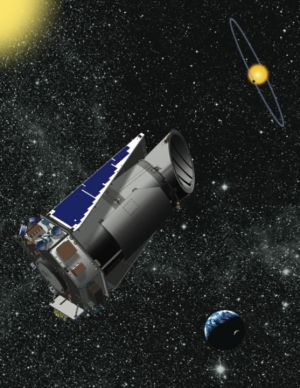 The Kepler mission has found its first batch of exoplanets, all of which are gas giants similar to Jupiter (though one is reportedly more like Neptune) orbiting very close to/quickly around their parent stars. It’ll be a few years before it finds anything else, because anything else takes a lot longer to orbit. Since Kepler is specifically looking for transiting planets (the planet passing directly between its parent star and us) it has to have 3-4 transits to be absolutely sure of its findings. Since planets like ours take a year or more to orbit… well, you do the math. It even found one gas giant that has the same approximate density as sytrofoam. (Via NASA and NewScientist)
Another interesting tidbit to come out this year is a much clearer picture of just how common solar systems like our own are in the universe/galaxy. According to astronomers from Ohio State University, who were heading up a larger collaborative effort called MicroFUN (micro-lensing follow-up network), about 10–15 percent of all stars have planet systems like ours (meaning a few gas giants orbiting far out, with probably a few small, rocky planets in closer). 10-15 percent may seem like a small number, but when you consider the overall vast number of stars just in our own galaxy alone, you’ll realize that even 10 percent equals hundreds of millions of solar systems. It should be quite obvious now that there are other worlds out there very similar to our own, we just haven’t found solid evidence of them yet, so we can’t be 100% sure. But I am confident the Kepler, the CoRoT mission, or maybe even a ground-based telescope, will find one within the next decade. (Via EurekAlert! and Space.com)
Here’s a little bit of everyday science for you:
We’ve all been annoyed when we get out of our cars or walk across a carpeted room in the winter time and shock the #&*$@! out of ourselves on the door/other metallic object. So why the hell does it always happen so much more in the winter? It has to do with the humidity. Especially in the eastern US, the winter months are much MUCH drier than the summer ones. (Remember that Relative Humidity is NOT a direct measurement of how much moisture is actually in the atmosphere, go by the dewpoint- the lower the dewpoint, the less moisture is in the air.) Colder air has less moisture capacity than does warmer air, thus the winter months are very dry. Well all know that static electricity is the buildup of an electric charge in our bodies and/or clothes due to simple friction. During the summer months when the air is more humid, the moisture in the air allows those charges to constantly dissipate because we all know water is a good conductor of electricity. The static electric charge never has a chance to build up because it’s constantly “seeping” away into the moist air. In the winter, the dry air does not conduct and “seep” away the static electric charge, allowing it to build up until we reach for something metallic such as a doorknob and POW! the electricity instantly discharges in one big spark and we get shocked.
Back with some science
December 30, 2009
The holidays obviously consumed my life to the point that I haven’t posted in over a week. Sorry ’bout that. I also haven’t shared any good sciencey tidbits in a while, so here you go:
I recently saw James Cameron’s latest epic Avatar. I won’t get too involved with reviewing the film as I’m no film critic by any means, but I will say this- it’s beautiful. The animation is astounding and most notably, the landscape is gorgeous. The dialogue and storyline is utterly pathetic. It’s basically the same story as Last of the Mohicans, Fern Gully, or Dances With Wolves, only this time it’s injected into a sci-fi mold. That being said, I always can enjoy that story to some degree no matter how many times it gets retold and rehashed. What is pretty cool about the movie is the science behind it. There will always be a big gap between “movie physics” and reality, but the over-arching idea of a habitable moon similar to Earth orbiting a gas giant similar to our own Jupiter in different star system is entirely plausible. The fact that the moon’s atmosphere is toxic to humans makes it slightly more realistic, along with the reduced gravity resulting in the native animal life being mostly large compared to that of Earth. Space.com has more on the science of Avatar’s Pandora.

Image via Universe Today
I’ve mentioned on here before that NASA and the European Space Agency have teamed up for the next decade or so of Mars exploration. The exact timeline and details of that effort are now beginning to come into focus, thanks to the recent discovery of a constantly replenished quantity of methane in Mars’ atmosphere The first step will be a new orbiting observatory launched in 2016 that is specifically equipped to further explore the possible sources of this methane, and map out exactly where it’s the strongest. Also on this first mission will be small lander designed to test the parachute/thruster landing system that will be used on the future missions involving the “real” landers/rovers. Those rover/lander missions will be launched in 2018, and will be specifically designed to search for signs of life. Recent developments in the theories about the possible source of the methane have started to lean more towards microbial life, probably living under the surface. That’s very exciting. More on this at Universe Today.
What kind of blogger would I be if I didn’t have some sort of “year-in-review” post? Unfortunately I haven’t had the time to come up with anything myself, but here are a couple of 2009 recap posts from other science blogs that you might find interesting:
Live Science: 9 stories we love, and hated, in 2009.
Space.com: The 9 top spaceflight stories of 2009.
Some of probably already know this, but I’m currently in the process of moving. Megan and I are renting a small house near Germantown, and though the house will be awesome once we get settled in, the timing really sucked. I can’t think of a worse possible time to be moving than during the holidays. So posting here will probably be limited until next week.
Virgin Galactic’s SpaceShip Two/Alt medicine takes a hit
December 8, 2009
Yesterday Virgin Galactic revealed their SpaceShip Two to the public. This is officially the first publicly accessible spacecraft ever. For a pretty penny (about $200,000) you can book yourself a ride on this thing, and it will take you to the edge of space. You’ll experience about 5 minutes of virtual weightlessness. Check out this video animation showing the flight from launch to landing: (pardon the cheesy sound effects…)
I suppose it’s reasonable to hope that one day, during my lifetime, it will become affordable for the average individual to take spaceflights like these and experience such a humbling and inspiring sight as the earth from space….
I’ve always been a logical and reasonable person who respects the efforts of science and thorough research, however I do keep my mind open and understand that there’s a lot we don’t yet understand about all aspects of science. Medicine is a part of the scientific field of study. While this LiveScience article points out that many fields of “alternative medicine” have taken a beating this year, it’s important to note that most of the “treatments” they mention have been thoroughly dis-proven many times before, yet some people still continue to push these methods as legitimate treatment. I have to admit that I laughed a little after reading the section on Reiki. Anyone who believes that someone standing over them holding their hands above their head is going to heal their cancer is absolutely insane. Do these people still believe in Santa Claus? Or the tooth fairy? There’s a little thing called reality. Reality is testable and provable. And reality is all there is. Period. Please read that article if you have ever considered one of those “alternative treatments.” My own father is currently undergoing what some would call “alternative treatment” for early stages of prostate cancer, but what he’s doing (very specific dietary guidelines combined with some herbal supplements) has at least some proven results. It’s more of what you would call an “experimental treatment” that hasn’t been studied thoroughly enough to be accepted in the mainstream. I have nothing against this and of course hope the treatment works, but I also hope it will get more thorough research. But the treatments mentioned in that article have been debunked. They are total bullshit. If you believe in them you might as well believe the moon is made of cheese.
Bizarre balloon-rocket moon mission/Gibson gets raided by the Feds
November 18, 2009
Two cool things come your way via Universe Today today:
Apparently a Romanian group is competing for the Google Lunar X-prize with a bizarre balloon-rocket combination. They have a nice animation video in the post that explains the design far better than I could with word, so just check it out for yourself. I never thought I’d see helium balloons involved in a project where getting to the moon is the final goal… It’s one of those things that’s mind-numbingly simple and you say “why did no one think of this before?”
Also from UT is this cool HD video of Space Shuttle Atlantis blasting off on Monday. The shuttle docked today with the ISS.
Regarding the Feds’ raid of Gibson HQ yesterday: (FYI- it wasn’t the FBI, it was the Fish & Wildlife Agency that raided them…)

Via Hartley
dpBestflow/more 2012 debunking/Vatican admits possibility of E.T.
November 12, 2009
As you can see from this video, NASA is joining in on the fight against junk science and stupidity in general by putting some of their scientists into the public eye to debunk the 2012 doomsday B.S. This is the manager of their Near Earth Object tracking office. I’d say he’s a pretty good one to talk about doomsday scenarios, since his office is responsible for tracking asteroids and any other objects that might slam into our pale blue dot and kill us all. DON’T BELIEVE THE SCAREMONGERS! THERE IS NO REAL, CREDIBLE SCIENCE BEHIND ANY OF THE 2012 DOOMSDAY MYTHS! (Via Universe Today)
In other science news, apparently the Vatican is officially acknowledging the possibility of extra-terrestrial life. They recently had a week-long study/discussion involving over 30 scientists and religious experts to develop an official stance/policy/statement about the subject. This is kind of surprising, because we all know that most sects of Christianity don’t always agree with science/reality. Good job, Pope. (Via Physorg)
The American Society of Media Photographers (ASMP) has been working with the Library of Congress for the past couple of years to create a huge online resource for photography info. They just launched it, and I can’t even begin to describe how awesome dpBestflow is. Find some downtime, and go check it out if you’re at all interested in photography. They’ve compiled loads of industry knowledge, standards, and general information, and it’s all in one place, for free. Basically, it’s everything you could possibly want to know about the profession of digital photography, all in one place. (Via Photo Business & News Forum)
Space Hotel/Neil deGrasse Tyson
November 5, 2009
Plans for a “space resort” have been in the books of many commercial aerospace corporations for years and years, but now it’s actually about to happen. Space.com reports that a European company based Barcelona, Spain plans to open the first space hotel in 2012. I must admit my doubts that it will actually be ready and operational by then, but it’s a pretty cool notion nonetheless. The company even reports that 43 paying guests have booked a stay. Don’t get your hopes up though, as a 3-night trip is currently carrying a price tag of $4.4 million. Even if they don’t hit the expected opening date in 2012, it will eventually happen, almost assuredly by 2020. It’s quite possible that space vacations could eventually come down in price enough that your average Joe might be able to afford one.
The well-known Drake Equation has long been used by scientists to approximate how many intelligent might exist elsewhere in our galaxy. A major problem exists with the numbers, though, because depending on your level of optimism and reasoning to arrive at certain variable within the equation, you can get a result ranging from millions of intelligent civlizations to almost none. That’s a HUGE variability and thus the Drake Equation really isn’t very effective, at least not until we can arrive at more concrete variables to plug into it. Some new research from astronomers at the University of Louisiana at Lafayette may actually give us a better idea of just how common life, and intelligent life, is in our galaxy. The research has found that Sun-like stars are the best places to look for planets with intelligent life. Not surprising at all, but what may surprise you is the fact that Sun-like stars are actually pretty rare. Our Sun is bigger and hotter than 93% of the stars in our galaxy (and presumably the universe), which means that the habitable zone around most stars is closer than the earth is to the Sun. Their research has also shown that bigger stars (like our Sun, or even bigger) are more likely to form small, rocky planets around them. Since bigger stars generally have shorter lifespans, you can see how there’s a sweet spot in star size where the star is big enough to be likely to have small, rocky planets, yet small enough that the overall lifespan of the star is longer than the time it takes for intelligent life to develop. (It took about 4.5 billion years for us to develop on earth.) We have a pretty good idea of how many stars are in the Milky Way, as well as the size distribution. That means about 10% of the stars in the Milky Way fall into that “sweet spot” category. Since there are over 100 billion stars in our galaxy overall, that means about 10 billion stars likely to have earth-like planets and live long enough for those planets to develop intelligent life. I’d say those are some pretty damn good odds of alien civilizations out there, and that’s just in our own little galaxy, which is one of BILLIONS. Most astronomers and astrobiologists agree there’s a pretty good chance we’re not alone. To me that is really exciting. (Via Astrobiology Magazine and Space.com)
Now that I’ve rambled way too much, enjoy this Time interview with one of my favorite “celebrity astronomers,” Neil deGrasse Tyson: (Via Snarkmarket)
And then enjoy watching Mythbusters’ Adam Savage give a vial containing one of his farts to Craig Ferguson as a gift. I could go on and on about how wonderful Mythbusters is. But I’ll spare you that rant. (Via Bad Astronomy)
Science tidbits: Mystery of the Pyramids/NASA gets Augustine report
October 27, 2009
 In addition to being a totally awesome sight to behold, the famous pyramids of Giza in Egypt have also been a bit of a mystery. Scientists and archaeologists had a hard time explaining exactly how they were built given the technological limitations of the time period. The Pharaohs had a massive army of laborers at their disposal, but carving those massive blocks out of stone and moving them over miles of scorching desert would seem to be an insurmountable task even for an army of men. I was intrigued when I stumbled across the work of Dr. Joseph Davidovits, who claims that the stones were actually cast from a type of limestone concrete. This method would’ve require FAR less man-power and makes the pyramids’ construction seem much more reasonable. The seemingly impossible construction of the pyramids has fueled some ridiculous crackpot ideas that aliens helped build them. I was very glad to see that real science has actually explained the mystery of their construction quite well. Science wins. As always. Read more about his book Why the Pharaohs built the Pyramids with fake stones on the website of the Geopolymer institute.
This morning NASA attempted to launch the Ares I-X, the very first full-scale test version of their new Ares I rocket, which (if NASA proceeds on the current path) will replace the space shuttle as our primary means of transporting astronauts to low earth orbit. But a series of silly issues such as a probe cover getting stuck and a cargo ship accidentally entering the danger zone, combined with bad weather caused the launch to be delayed… possibly until tomorrow, maybe later.
Speaking of NASA… last week they got the full, detailed report from the Augustine Commission, which is a group of aerospace industry experts put together earlier this year by the Obama Administration to assess the state of manned spaceflight within NASA. Basically it’s a more fleshed-out, complete version of the preliminary report I mentioned several weeks ago on this blog. It’ll be interesting to see which solution NASA administrator Charles Bolden and the Obama Administration decide to go with. Personally, I’d like to see NASA get that additional 3 billion they need, but who knows? I can’t really summarize the options any better than Universe Today did last week when they reported on this, so I’ll just quote:
1. Maintain all programs as is, but extend the space shuttle program to 2011 and ISS to 2020. Without extra funding, the Ares rockets wouldn’t be ready until 2020 and there would never be enough money to go to the Moon.
2. Maintain current funding, scrap Ares I, develop an Ares V lite version (about 2/3 of Ares V heavy) and divert extra funds to ISS for extension to 2020. Buy commercial LEO human space flight. The Ares might be ready by 2025, and perhaps get to the Moon after 2030.
3. Add $3 billion per year and proceed with the Constellation program to return to the Moon. The ISS would have to be de-orbited in 2016 to allow a return to the Moon by about 2025.
4. Add $3 billion per year. Extend the ISS to 2020 and get to the Moon by about 2025. Use either Ares V Lite, or Shuttle-C for heavy lift.
5. Add $3 billion per year. Extend the shuttle program to 2011 and extend ISS to 2020. Instead of heading to land on the Moon, orbit the Moon, or go to Near Earth Objects and prepare to go to Mars. Use either Ares V Lite; a heavy Evolved Expendable Launch Vehicles (EELV) or, a shuttle-derivative.
So there you have it.
Yesterday some news outlets reported on a possible crater in Latvia left by a large meteorite impact. Well, it’s been confirmed as a FAKE, so don’t let anyone tell you otherwise. Some Latvians must’ve had waaay too much time on their hands because after detailed inspection, shovel marks could be seen on the edge of the hole. I won’t spend too much time explaining all the obvious scientific inconsistencies because Dr. Phil Plait has done a thorough job of it at his blog Bad Astronomy. The biggest misconception about meteorites is that all of them cause a crater if they make it all the way to the ground- they don’t. In fact most that do hit the ground are less than a meter in diameter and actually are cold by the time they reach it. They also are traveling at normal terminal velocity and just hit with a non-crater-causing thud.
Finally, I’m really happy to see that the Large Hadron Collider repairs came along nicely and they’ve started inserting particles into loop. No actual collisions yet, but if all goes as planned they should be doing their first ones next month. Follow CERN on Twitter for updates.
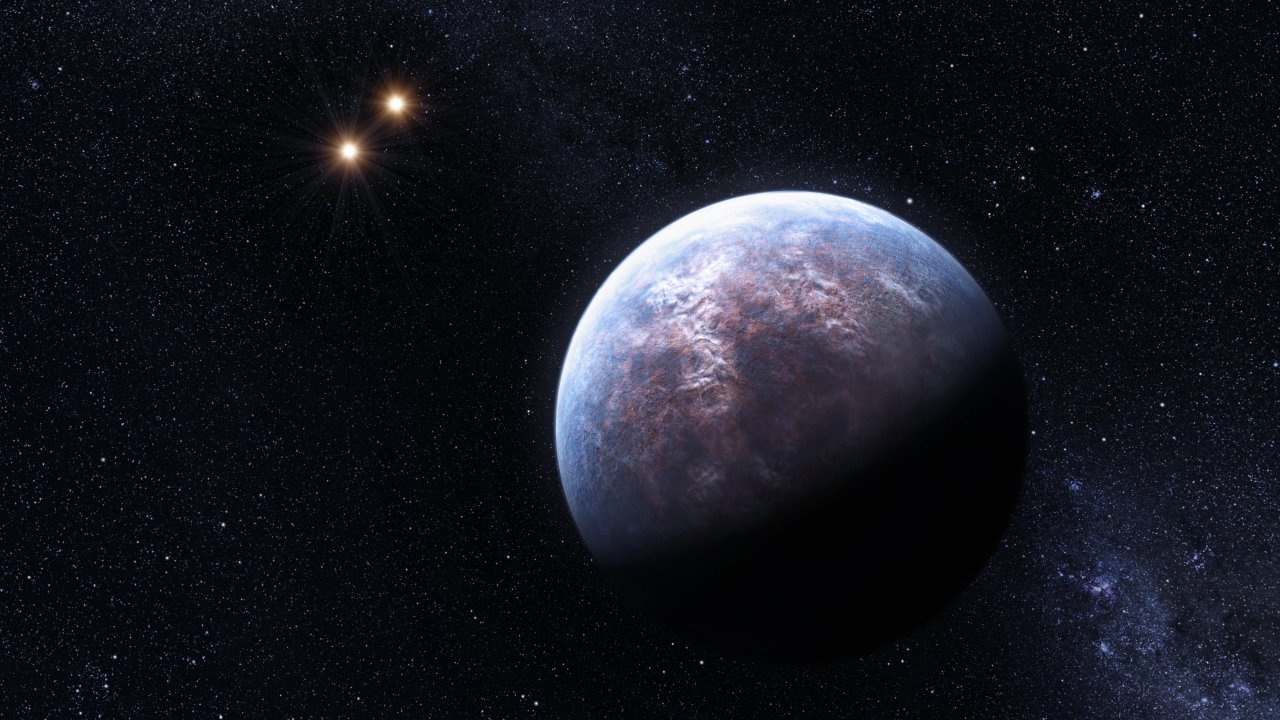 The floodgates of exoplanet discovery just opened. The High-Accuracy Radial Velocity Planet Searcher (known as HARPS) discovered a batch of 32 new exoplanets, pushing the list of known exoplanets to over 400. Most of these are low-mass planets about the size of Neptune. Since HARPS (which is a spectrograph) works with a land-based telescope which has to put up with the distortions and aberrations of the Earth’s atmosphere, that’s a very impressive feat. It shows just how good astronomers are getting at planet-hunting, and with the recently-deployed Kepler space observatory working like a charm, it won’t be long before we find the jackpot of astronomy to date: an Earth-like planet orbiting a distant star. (Via Universe Today)
I’ve mentioned that new theories challenging the textbook theory of a massive asteroid impact in Mexico killing off the dinosaurs are gaining serious momentum in the field of paleontology. The main challenge to the impact theory is the one involving a massive, long-erupting supervolcano in India known as the Deccan Traps. India has coughed up yet another, 3rd challenge to the impact theory: an impact event of its own. Some researchers from Texas Tech University think that a huge depression that exists beneath part of the Indian Ocean is actually an impact crater, and that it’s the result of an asteroid that smacked into the earth near the time the dinosaurs went extinct. (In geologic terms “near” actually means within a few million years…) If this turns out to be a true crater, and not just the result of normal tectonic plate movements or volcanic activity, then I’d say it definitely had at least some effect on the dinosaurs, and probably some effect on the ongoing eruption of the Deccan Traps. (Also via Universe Today)
NASA rolled out the first full sized test vehicle for its new Constellation program earlier this week. The Ares I-X was rolled out to launch pad 39B for its scheduled test flight next week on Oct. 27th. This is a full-scale mock-up of the Ares I, which (if the current plan is adhered to) will replace the Space Shuttle as NASA’s method of delivering astronauts to and from low Earth orbit. The test flight, of course, will be unmanned. Here’s a pic via NASA’s website. Keep up with the test launch at the launch blog. The new rocket is 327 feet tall, over 100 feet taller than the Space Shuttle.

Click to enlarge

 steve cross loves music and science