Neutrinos faster than light? Let’s be realistic.
September 26, 2011

Of course the big news about the “faster than light” neutrinos would have to break right in the middle of Soundland, when I was insanely busy running around taking literally thousands of photos for 4 days straight… but the above image pretty much sums up how I feel about it. There’s an old saying in science- extraordinary claims require extraordinary evidence. However, in this case we’re not dealing with crackpot fringe scientists, we’re dealing with CERN scientists. In other words these people are very disciplined and have ruled out just about every other statistical anomaly, measurement inaccuracy, or other explanation for their results. So the fact that they measured neutrinos that appear to have traveled faster than light is not in question. The key word there is appear. And this is such a massively important discovery that the scientists involved are asking for comparison from the rest of the worldwide scientific community. They want others to repeat their experiments and see if they get the same result. When you’re questioning one of the most iron-clad, thoroughly proven theories of science such as General Relativity, you’d better have rock-solid, repeatable evidence to support your claim. No matter what the outcome of this, it will fascinating to sit back and watch as it unfolds. Here are a few links to interesting articles I’ve found relating to this news:

Artist's concept of NASA's new SLS
Today NASA Administrator Charles Bolden and members of Congress announced an agreement to build the most powerful rocket in US history. The launch system (or SLS for space launch system) is intended to take astronauts beyond low-Earth orbit, including asteroids and Mars. The SLS is a derivative of the space shuttle in that it uses 5 space shuttle engines and a fuel tank based on the design of the shuttle’s external fuel tank. There will also be two solid rocket boosters on either side of the main stack. The key difference is that the multi-purpose crew vehicle (MPCV), which is already under construction, will sit atop the entire stack, and will have an escape rocket system that will enable the crew to safely escape almost any type of failure or explosion at any stage during ascent. In many ways this new system is a hybrid of the Apollo-era Saturn V system and the space shuttle. For more info check out the official story on NASA’s website.
This is an exciting announcement, and it’s good to know that many aspects of this new SLS are based on or directly utilize existing technology. This means that the overall cost should be significantly lower than if we’d tried to build something entirely new. I’m glad there was bipartisan agreement that led to this decision being made relatively quickly. The target date for the initial launch of this new SLS is 2017. That seems realistic and I certainly hope it is. Humanity is long overdue to reach beyond low-Earth orbit and explore deep space.
New somewhat Earth-like exoplanet/Symphony of Science
September 5, 2011
It’s been waaaay too long since I had a good space/science post. So here are a couple of interesting things that have already been floating around the science blogs for a few days, but you may not have heard about unless you’re as big of a nerd as I am. 🙂
- We have another interesting exoplanet discovery worth talking about. It’s another super-Earth that sits within the habitable zone of its parent star- that is- liquid water could exist on its surface. At least, provided there is sufficient cloud cover. This planet, which has the fascinating title of HD 85512 b, is near the warmer edge of the habitable zone, which means there would have to be sufficient cloud cover to reflect some of the incoming radiation from its star, lest it have a runaway greenhouse effect that would make it very Venus-like (scorching hot and covered in dense, toxic clouds). This world is about 3.6 times the mass of Earth, but it was detected using the radial velocity method rather than the transit method, so we only know its mass, not its size. But if it’s a rocky world and its mass is 3.6 times that of Earth, it’s bound be a good bit bigger than Earth. Granted, we don’t know anything for sure about the atmospheric makeup of this exoplanet because we don’t have any instruments capable of detecting that yet. The radial velocity method detects planets orbiting a star by seeing the tiny gravitational wobble the planet exerts on its parent star. If we eventually aim a telescope such as Kepler at this star, and the planet transits the star, we’ll then know its approximate size and may even be able to make a better judgment on its atmospheric makeup. Until then, though, we have to rely on computer models to speculate what the air might be like. For more info see: Universe Today or National Geographic.
- You may recall Symphony of Science from back when Jack White’s Third Man Records released a 7″ vinyl single of the track “A Glorious Dawn ft. Stephen Hawking.” Phil Plait of Bad Astronomy mentioned in a post yesterday that John Boswell, creator of Symphony of Science, has put 11 tracks in a compilation on bandcamp for free (or name your own price). So go snag it now and throw the guy a few bones while you’re at it. It’s a pretty awesome idea, and I’m obviously a fan of anything that puts music and science in the same sentence.

Credit: NASA (Click for full size)
NASA just released some pretty interesting news this afternoon. The Mars Reconnaissance Orbiter (MRO) has been taking photos of the surface of Mars for many years, and scientists have seen what looked like gullies on the surface. But, they had no way to confirm whether those gullies were caused by water or just sand sliding down a slope, or by frozen CO2. There is still no way to confirm for certain that what we’re seeing was caused by flowing water on the surface, but evidence is starting to lean in that direction. These dark finger-like features have been seen changing shape before- but on the colder side of the slope that faces away from the sun most of the day. That would point toward the gullies being caused by frozen CO2. These new images are of features on the warmer sun-facing side of the slopes, meaning the likelihood of them being caused by flowing liquid water is far greater. The most important thing here is to remember that this is NOT confirmation of liquid water on the surface of Mars. It is, however, highly suggestive of liquid water on the surface of Mars. This is exciting news because if it is indeed liquid water, there’s a much better chance that microbial life might still exist. Another important thing to remember is that we already know water exists on Mars- we’ve seen it as ice, both directly (Phoenix lander) and indirectly (radar soundings from MRO indicating water ice below the surface). The key to life though, is liquid water.
As usual, Dr. Phil Plait has a very good explanation of all this on Bad Astronomy, so I recommend checking that out. The NASA article can be found here.
Through the Wormhole with Morgan Freeman: watch it
July 20, 2011
 This post on Universe Today prompted me to write up my own little plug for the Science Channel’s new(ish) show Through the Wormhole with Morgan Freeman. The show is in its second season and is seeing more success than your average run-of-the-mill science show. Obviously having a celebrity figure like Morgan Freeman as the host is big reason for that, but watch the show and you’ll really understand why. It’s just uncannily appealing to hear Freeman’s warm, grandfatherly voice talking about quantum entanglement, time travel, string theory, relativity and all sorts of other fascinating topics that are at the very edge of modern science. The context and delivery of the information is unique, too. It’s hard to present what most average folks regard as “mumbo-jumbo” in a way that keeps them interested for a whole hour, but this show manages to pull it off. Freeman’s own genuine interest in the subject matter is definitely a big reason the show is successful; he has always had a keen interest in these edgey topics and simply decided to make a show in which he both asks these questions to real scientists who are working to answer them and attempts to share that sense of awe and wonder that inspired him to ask said questions to begin with. Tonight’s episode focuses on the question “can we travel faster than light?” This is obviously a very important question to answer if mankind is ever to explore beyond our own solar system. All those convenient workarounds (warp drives, hyper-space windows, wormholes, etc…) you see in science fiction actually have some basis in real scientific principles, and I suspect we’ll get much clearer and layman-friendly explanation than ever before of those principles on tonight’s episode. It airs at 10pm eastern/9pm central on the Science Channel, which most of you should now get if you have regular cable or satellite service.
The end of the Space Shuttle era
July 7, 2011
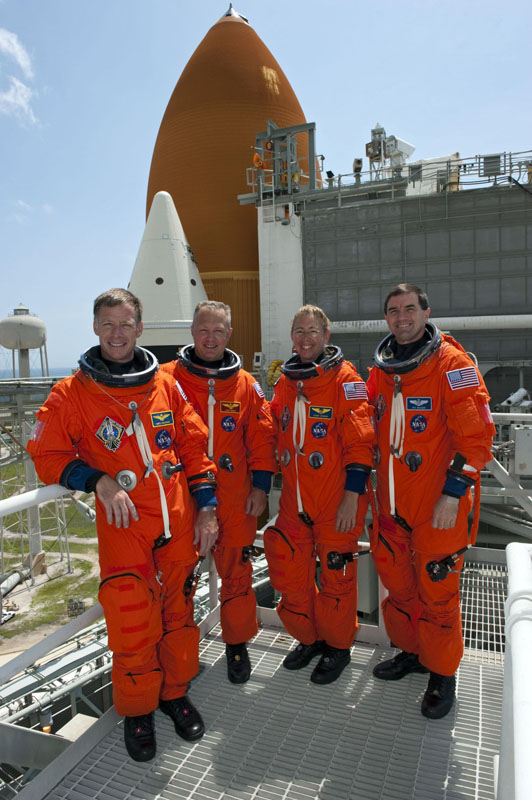 If all goes as planned, tomorrow’s scheduled launch of Space Shuttle Atlantis will be the beginning of the end for the shuttle program. And when it touches down, the shuttle era will officially be over. With the program literally being almost exactly as old as I am (the first shuttle flight was on April 12, 1981, and I was born on Nov. 20th, 1981), it just seems surreal to know that the shuttles will no longer be operating. They were the face of NASA as I was growing up- they were “it.” But it is time for NASA to move on, let the private spaceflight industry take over the now routine task of ferrying astronauts to the ISS, and focus on exploring beyond low earth orbit.
The last I read, weather is going to be a big concern for the launch tomorrow, so there’s a decent chance it’ll get pushed back days or even weeks. But when it does happen, you should watch it. Especially if you’ve never seen one before. It’ll be all over the media so it’ll be hard to miss.
I decided to gather a few of the more interesting shuttle-related links I’ve come across over the past few days in my various science and space-related RSS feeds:
- Photo gallery of Atlantis on the launchpad, via Universe Today.
- Photo gallery that spans the entire shuttle program’s history, via Discovery News.
- Discovery’s first pilot remembers its troubled first mission, via Discovery News.
- Countdown: 10 amazing space shuttle photos, via Space.com.
- A glimpse into the complex rescue scenario in the event that Atlantis is irreparably damaged and incapable of re-entry, via Space.com.
I’ve been waiting since the end of May for this:

(Click to enlarge) Credit: NASA/Paolo Nespoli
THAT is something that has never been captured on film before. It may not seem like a big deal, but the opportunity to to photograph a space shuttle docked to the ISS from space has never happened before, and never will again. The schedules happened to line up so that a Russian Soyuz capsule undocked from the ISS carrying three astronauts home while Endeavour was still docked. This gave astronaut Paolo Nespoli the opportunity to take photos of the shuttle/ISS combo from the window of the Soyuz capsule as they floated away. They paused the Soyuz some distance away and the space station actually performed a “flip” maneuver to allow for more angles. Please click through to the NASA image gallery and see the rest of these amazing images.
 Think the idea of humans boarding a massive spaceship headed into the cosmos for 100’s or even 1,000’s of years (a.k.a. real-life Star Trek) is completely in the realm of science fiction? Think again. Last fall DARPA (Defense Advanced Research Projects Agency), the highly secretive experimental arm of the Department of Defense who happened to invent the internet, released an official Request for Information regarding a “100-year starship plan.” Basically, they want people to come up with a fully thought-out plan for forming a team of researchers/engineers/scientists to investigate the technology necessary to build such a spaceship. Needless to say, this is one tiny baby step in a project that could cost many billions of dollars and require decades of advances in propulsion technology, but it’s still rather amazing that there is real, serious effort being put into something that has always seemed so far out of reach for humankind. As pointed out in their RFI, there will no doubt be unanticipated discoveries and technological advances as a “side-effect” of this research. So the actual spaceship itself is not the only purpose of this initiative. It really makes me happy to see something like this happening because I think manned space exploration has been quite stagnant for the last couple of decades. We need this kind of spark to really push forward the technology needed to extend our presence beyond low-Earth orbit. (Via Universe Today)
Ok, that’s really it for this week. Probably. I can’t fathom any more posts because tomorrow morning I will be heading to Manchester with the rest of the Scene/Cream team to photograph Bonnaroo. Keep your eyes on the Nashville Cream for updates on our shenanigans, and to see some of my photos.
Shows to see this weekend
June 3, 2011
Here’s a quick rundown of shows I recommend this weekend in Nashville:
FRIDAY:
Lambchop at Cheekwood Botanical Gardens. This is strange but awesome juxtaposition of outdoor fun, art, food, and music. The event starts at 5pm, but Lambchop plays at 9pm. For more info checkout Cheekwood’s website.
Quichenight, A Country Gentleman, Rock City Birdhouse @ the 5 Spot. 9pm $5
SATURDAY:
Times New Viking, D. Watusi, Big Surr @ The End. 9pm $10
… That’s about it for stuff that piques my interest.
I simply can’t go without posting this awesome video created by director Chris Abbas that combines a plethora of amazing imagery from the Cassini spacecraft (which has been orbiting Saturn for many years now) with the track “2 Ghosts I” from the album Ghosts I-IV by Nine Inch Nails. As the name of this blog implies, I’m obviously a huge fan of both music and science, and when they come together to create something beautiful like this I’m a happy man. If you can’t enjoy this there is something wrong with you. *HINT: If you’re viewing this post in an RSS reader, the Vimeo video below doesn’t show up, click through to actually view the blog page to see it!*
Have a great weekend!
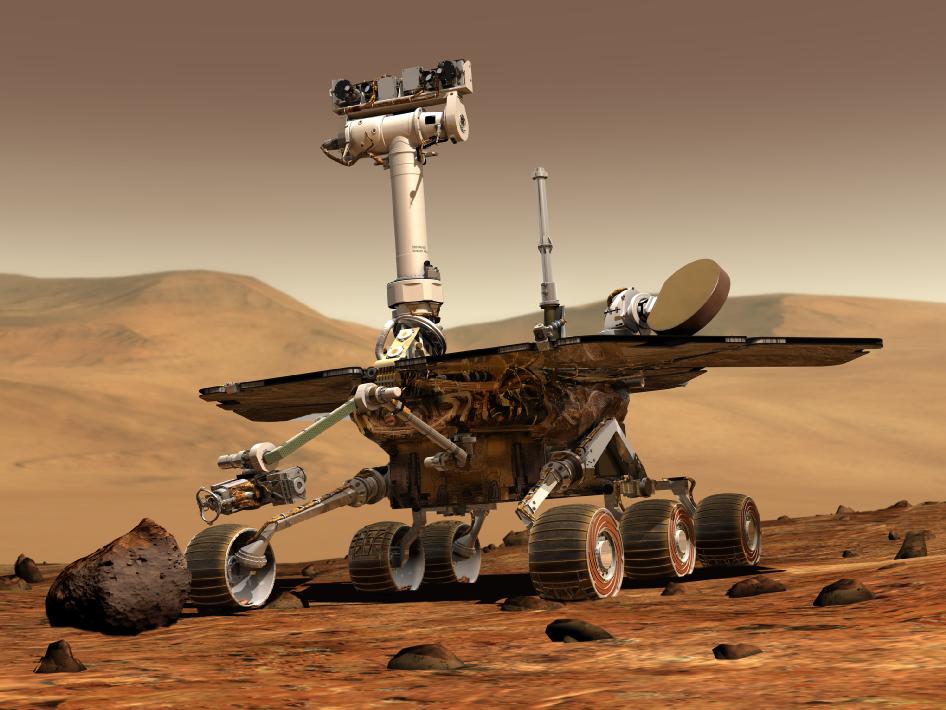
Credit: NASA
NASA has officially given up efforts to contact the presumably dead Mars rover Spirit. Things started going downhill for the rover back in the Spring of 2010 after attempts to free it from a mound of sand were unsuccessful. The rover was in a bad position for its solar panels to absorb power from the sun, and with the impending martian winter, engineers put Spirit into a sort of “hibernation” mode. They feared that the rover didn’t have enough power to run its heaters which protect the circuitry from the -125 °F temperatures that can occur during winter. Those fears appear to be correct, because now that we’re well into the Martian spring (for Spirit’s location), the solar panels should have collected plenty of power to run the communications equipment. But the rover has been silent for several months now, and the engineers believe the rover is truly dead.
The good news is that Spirit’s twin, Opportunity, is still going strong on the other side of the Mars, with no problems whatsoever. And furthermore, the death of Spirit comes after over 6 YEARS of operation. Loads and loads of valuable data have been gained from the rover, and it has lasted 25 TIMES its expected lifespan of a few months. I’ve said it before and I’ll say it again, these twin rovers are arguably NASA’s second greatest achievement, behind putting a man on the moon. For more, read Phil Plait’s post on this, or go straight to the source, NASA.

Endeavour launched through a low deck of clouds Monday morning. Credit: NASA
As I’m sure you know, Space Shuttle Endeavour launched Monday morning, and is now docked with the International Space Station. I want to point out one very special part of this mission that could change mankind’s understanding of the universe forever- the Alpha Magnetic Spectrometer. This device is the brainchild of Nobel Prize winner Professor Samuel Ting. It cost about $2 billion to build, but the knowledge gained from it will be well worth the money. The device will be mounted on the exterior of the ISS and will run its experiments for the rest of the duration of the ISS (currently the ISS is to be funded and run through 2025). Basically, this amazing piece of equipment has a ring of immensely powerful magnets that will bend the path of any nearby cosmic rays so that they pass through a very sensitive detector. The velocity of these cosmic rays out in space is many orders of magnitude greater than anything we can create in a collider here on Earth (the Large Hadron Collider, for example). These rays do hit the Earth’s atmosphere, but most of them are scattered, deflected, or broken up by the ozone layer. That’s why this space-based experiment is so important. The main things Ting will be looking for are evidence of antimatter, dark matter/dark energy, strangelets, and other aspects of cosmic radiation that could affect future missions involving manned spaceflight. For a good breakdown of each of these scientific objectives, visit the AMS’s official website. The wikipedia page and this space.com article are also pretty good.
It’s been a while since I’ve talked much about exoplanets- one of my favorite areas of science and astronomy. I’m happy to report that our old friend Gliese 581 has yet another surprise: one of its well-confirmed planets may actually have liquid water on its surface, which means the temperature range would generally be suitable for human life. For a few years now we’ve known about several planets orbiting this red dwarf star that sits about 20 light-years away from us. The latest exoplanet discovery associated with this system (Gliese 581g) is being hotly contested, so it may not even exist at all, but the one we’re now talking about is certain to exist. It could be a while before we can definitively say whether or not this exoplanet (Gliese 581d) actually has liquid water on its surface, but a new set of computer models/simulations has shown that if the atmosphere of this rocky super-earth is dense enough, it would be stable and keep the temperature range suitable for liquid water, and possibly even life. This all hinges on an assumption that this world has a thick atmosphere full of CO2, so scientists aren’t really certain about the climate. But, based on what is known about planet formation and the makeup of Gliese 581d, a thick CO2 atmosphere is very likely to exist. This is certainly not the “holy grail of planet-hunting” a.k.a. an earth-twin because the planet is about twice the size of Earth/has about 7 times the mass, is tidally locked (meaning the same side always faces its star), and has an atmosphere of mostly CO2. Indeed, if life exists at all on this world, it would be vastly different from what’s found on Earth, but this news is very exciting nonetheless.

 steve cross loves music and science