 A massive grin sprawled across my face as I read this Nashvillest post about the upcoming “Way Late Play Date” nights at the Adventure Science Center. “Best idea ever” is an understatement. It’s been at least 15 years since I’ve been to that place- then it was called Cumberland Science Museum I believe- and I’ve wanted to go back ever since moving to middle TN in 2000. I’m quite sure I’m not the only one who’s wanted to go but felt like I’d get in the way of all the kids if I went without having my own kids. Some genius in their event planning dept. must’ve realized this and come up with the idea for this event. It’s a 21+ event, which will include 2 alcoholic drinks in the $15 ticket price. Booze+science is a winning combination in my mind. I just really hope some dumbass doesn’t get wasted and then hurl while in the moonwalk simulator. Oh, and you can also get a discount by buying 2 tickets together for only $25. The dates are June 24th and July 27th. Embrace your inner nerd and get tickets here before they sell out! (Megan & I will be there June 24th.)
I’ve written many blog posts about NASA’s Kepler Mission here early last year around the time it launched, but it’s been a while since I mentioned it. The spacecraft has been silently staring into the heavens looking for minuscule dips in stars’ brightness which may indicate a transiting planet orbiting said star. Now that it’s been over a year since its first observations, NASA is obligated by law to release the data to the public for further scrutinization. Astoundingly, Kepler has produced a list of 750 candidates for exoplanets. This is a massive list, considering the current list of known exoplanets is at about 450. I say “candidates” because these are not confirmed exoplanets yet, they are data sets that could indicate exoplanets, but those stars need further review and observation by other telescopes to confirm that the dips in their brightness was definitely caused by a transiting planet. This could take years, because in some of the cases, another transit will have to be observed to confirm that it’s indeed a planet. Nevertheless, this is very exciting news, and I have absolutely no doubt that at least one of these candidates will turn out to be the holy grail of planet-hunting: an earth twin. Read more about this at Universe Today, and even more at the NY Times.
Now behold the most badass kid ever. He had his tooth pulled by a rocket. (You may think this is a bit cruel, but I’m positive that the tooth was a baby tooth that was on the verge of falling out anyway.) (Also via Universe Today)
Static electricity/astronomy updates
January 6, 2010
January is often a time for lots of updates from the world of astronomy, because it’s when the American Astronomical Society has their yearly conference/meeting. This year’s is a big one, with lots of news regarding exoplanets. Unofortunately, no Earth-twins have been found yet but there are some other interesting stories from Kepler and many other sources. Some highlights so far:
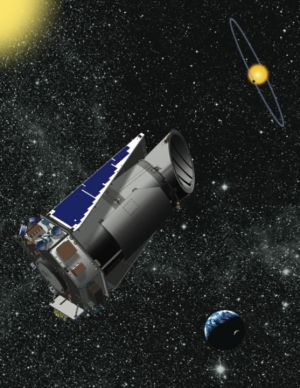 The Kepler mission has found its first batch of exoplanets, all of which are gas giants similar to Jupiter (though one is reportedly more like Neptune) orbiting very close to/quickly around their parent stars. It’ll be a few years before it finds anything else, because anything else takes a lot longer to orbit. Since Kepler is specifically looking for transiting planets (the planet passing directly between its parent star and us) it has to have 3-4 transits to be absolutely sure of its findings. Since planets like ours take a year or more to orbit… well, you do the math. It even found one gas giant that has the same approximate density as sytrofoam. (Via NASA and NewScientist)
Another interesting tidbit to come out this year is a much clearer picture of just how common solar systems like our own are in the universe/galaxy. According to astronomers from Ohio State University, who were heading up a larger collaborative effort called MicroFUN (micro-lensing follow-up network), about 10–15 percent of all stars have planet systems like ours (meaning a few gas giants orbiting far out, with probably a few small, rocky planets in closer). 10-15 percent may seem like a small number, but when you consider the overall vast number of stars just in our own galaxy alone, you’ll realize that even 10 percent equals hundreds of millions of solar systems. It should be quite obvious now that there are other worlds out there very similar to our own, we just haven’t found solid evidence of them yet, so we can’t be 100% sure. But I am confident the Kepler, the CoRoT mission, or maybe even a ground-based telescope, will find one within the next decade. (Via EurekAlert! and Space.com)
Here’s a little bit of everyday science for you:
We’ve all been annoyed when we get out of our cars or walk across a carpeted room in the winter time and shock the #&*$@! out of ourselves on the door/other metallic object. So why the hell does it always happen so much more in the winter? It has to do with the humidity. Especially in the eastern US, the winter months are much MUCH drier than the summer ones. (Remember that Relative Humidity is NOT a direct measurement of how much moisture is actually in the atmosphere, go by the dewpoint- the lower the dewpoint, the less moisture is in the air.) Colder air has less moisture capacity than does warmer air, thus the winter months are very dry. Well all know that static electricity is the buildup of an electric charge in our bodies and/or clothes due to simple friction. During the summer months when the air is more humid, the moisture in the air allows those charges to constantly dissipate because we all know water is a good conductor of electricity. The static electric charge never has a chance to build up because it’s constantly “seeping” away into the moist air. In the winter, the dry air does not conduct and “seep” away the static electric charge, allowing it to build up until we reach for something metallic such as a doorknob and POW! the electricity instantly discharges in one big spark and we get shocked.
Space Hotel/Neil deGrasse Tyson
November 5, 2009
Plans for a “space resort” have been in the books of many commercial aerospace corporations for years and years, but now it’s actually about to happen. Space.com reports that a European company based Barcelona, Spain plans to open the first space hotel in 2012. I must admit my doubts that it will actually be ready and operational by then, but it’s a pretty cool notion nonetheless. The company even reports that 43 paying guests have booked a stay. Don’t get your hopes up though, as a 3-night trip is currently carrying a price tag of $4.4 million. Even if they don’t hit the expected opening date in 2012, it will eventually happen, almost assuredly by 2020. It’s quite possible that space vacations could eventually come down in price enough that your average Joe might be able to afford one.
The well-known Drake Equation has long been used by scientists to approximate how many intelligent might exist elsewhere in our galaxy. A major problem exists with the numbers, though, because depending on your level of optimism and reasoning to arrive at certain variable within the equation, you can get a result ranging from millions of intelligent civlizations to almost none. That’s a HUGE variability and thus the Drake Equation really isn’t very effective, at least not until we can arrive at more concrete variables to plug into it. Some new research from astronomers at the University of Louisiana at Lafayette may actually give us a better idea of just how common life, and intelligent life, is in our galaxy. The research has found that Sun-like stars are the best places to look for planets with intelligent life. Not surprising at all, but what may surprise you is the fact that Sun-like stars are actually pretty rare. Our Sun is bigger and hotter than 93% of the stars in our galaxy (and presumably the universe), which means that the habitable zone around most stars is closer than the earth is to the Sun. Their research has also shown that bigger stars (like our Sun, or even bigger) are more likely to form small, rocky planets around them. Since bigger stars generally have shorter lifespans, you can see how there’s a sweet spot in star size where the star is big enough to be likely to have small, rocky planets, yet small enough that the overall lifespan of the star is longer than the time it takes for intelligent life to develop. (It took about 4.5 billion years for us to develop on earth.) We have a pretty good idea of how many stars are in the Milky Way, as well as the size distribution. That means about 10% of the stars in the Milky Way fall into that “sweet spot” category. Since there are over 100 billion stars in our galaxy overall, that means about 10 billion stars likely to have earth-like planets and live long enough for those planets to develop intelligent life. I’d say those are some pretty damn good odds of alien civilizations out there, and that’s just in our own little galaxy, which is one of BILLIONS. Most astronomers and astrobiologists agree there’s a pretty good chance we’re not alone. To me that is really exciting. (Via Astrobiology Magazine and Space.com)
Now that I’ve rambled way too much, enjoy this Time interview with one of my favorite “celebrity astronomers,” Neil deGrasse Tyson: (Via Snarkmarket)
And then enjoy watching Mythbusters’ Adam Savage give a vial containing one of his farts to Craig Ferguson as a gift. I could go on and on about how wonderful Mythbusters is. But I’ll spare you that rant. (Via Bad Astronomy)
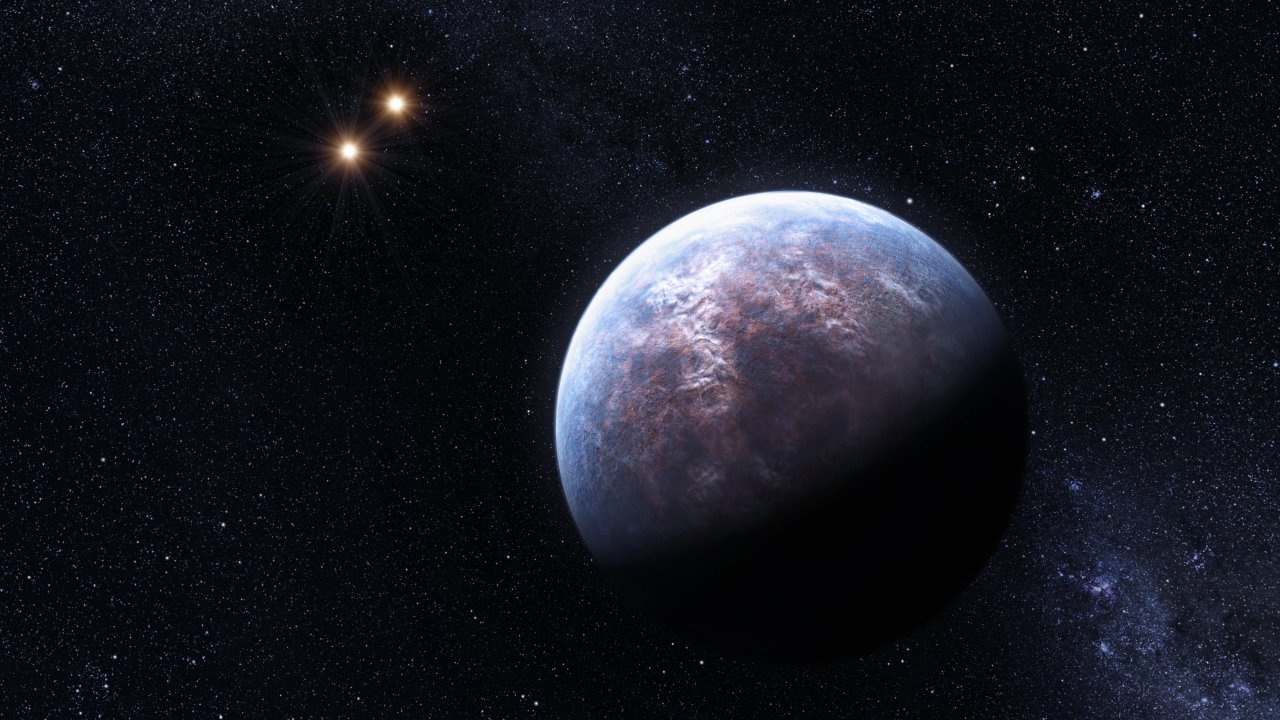 The floodgates of exoplanet discovery just opened. The High-Accuracy Radial Velocity Planet Searcher (known as HARPS) discovered a batch of 32 new exoplanets, pushing the list of known exoplanets to over 400. Most of these are low-mass planets about the size of Neptune. Since HARPS (which is a spectrograph) works with a land-based telescope which has to put up with the distortions and aberrations of the Earth’s atmosphere, that’s a very impressive feat. It shows just how good astronomers are getting at planet-hunting, and with the recently-deployed Kepler space observatory working like a charm, it won’t be long before we find the jackpot of astronomy to date: an Earth-like planet orbiting a distant star. (Via Universe Today)
I’ve mentioned that new theories challenging the textbook theory of a massive asteroid impact in Mexico killing off the dinosaurs are gaining serious momentum in the field of paleontology. The main challenge to the impact theory is the one involving a massive, long-erupting supervolcano in India known as the Deccan Traps. India has coughed up yet another, 3rd challenge to the impact theory: an impact event of its own. Some researchers from Texas Tech University think that a huge depression that exists beneath part of the Indian Ocean is actually an impact crater, and that it’s the result of an asteroid that smacked into the earth near the time the dinosaurs went extinct. (In geologic terms “near” actually means within a few million years…) If this turns out to be a true crater, and not just the result of normal tectonic plate movements or volcanic activity, then I’d say it definitely had at least some effect on the dinosaurs, and probably some effect on the ongoing eruption of the Deccan Traps. (Also via Universe Today)
NASA rolled out the first full sized test vehicle for its new Constellation program earlier this week. The Ares I-X was rolled out to launch pad 39B for its scheduled test flight next week on Oct. 27th. This is a full-scale mock-up of the Ares I, which (if the current plan is adhered to) will replace the Space Shuttle as NASA’s method of delivering astronauts to and from low Earth orbit. The test flight, of course, will be unmanned. Here’s a pic via NASA’s website. Keep up with the test launch at the launch blog. The new rocket is 327 feet tall, over 100 feet taller than the Space Shuttle.

Click to enlarge
Rocky exoplanet confirmed/nerd Venn diagram
September 17, 2009

Image Via Space.com
A European satellite observatory recently discovered a very small exoplanet that is said to be the first with a proven density similar to Earth’s. Follow-up observations were done at a telescope in Chile to determine the planet’s mass, which was then combined with its radius to calculate its density. The planet has about 5 times Earth’s mass. But don’t get too excited just yet- the planet is far from habitable. It orbits VERY close to its parent star (23 times closer than Mercury is to our Sun), which not only means it’s really effin’ hot, but it also is probably tidally locked, which means the same side of the planet is always facing the star. So one side is literally boiling with molten rock, and the other side is extremely cold. There’s no way it could have any atmosphere, either. BUT this is still an important step toward finding an Earth-twin. No we know that we can find planets similar in size and density to our own. It’s just a matter of time until Kepler or CoRoT finds one orbiting in its star’s habitable zone. (Via Space.com)
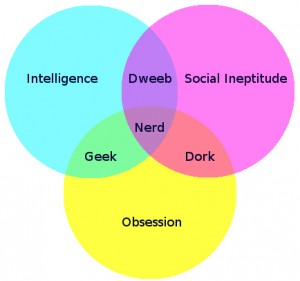
Ever wondered about the difference between a nerd, a geek, a dweeb, and dork? Look no further. This pretty much nails it down perfectly. (Via Clusterflock)
Ice Cream/Ray Kurzweil/NASA embarks on biggest delay ever
April 21, 2009

Today is the annual free cone day at Ben & Jerry’s. From what I’ve heard, they’ve gotten the issue of long-line-management down to a science, and it shouldn’t take as long as you think it will to get through. Good luck! I honestly don’t know if I’ll do it or not…
The Protomen won last night’s Road to Bonnaroo 8 off 8th. They join The Features, who won the first installment of this 3-part series. The final one happens Mon. May 18th.
The 2009 Lollapalooza official lineup has been announced. Headliners are: Depeche Mode, Tool, the Killers, Jane’s Addition, Beastie Boys, and Kings of Leon. It takes place August 7-9 in Grant Park, as always.
Diplo and Switch have a new Jamiacan dancehall-inspired project called Major Lazer. It’s pretty much exactly what you’d expect when you mention those two and dancehall in the same sentence. Stereogum has 2 free mp3’s.
The new Zooey Deschanel film 5oo Days of Summer screened at the Nashville Film Festival this past weekend. Not exactly sure of the Nashville connection to this film, but Nashvillest has a nice guest blog review by Winston Hearn.
A documentary film on renowned inventor and thinker Ray Kurzweil has been made. It’s called Transcendent Man. According to my NetFlix, a release date has not been announced, but it’s in the Tribeca Film Festival. Kurzweil theorizes that humanity will reach a technological singularity in the next 30 years, and that the only way for us to survive is to learn how to become literal cyborgs- meld our minds with computers. Here’s the trailer.
Space.com reports that the lightest exoplanet thus far has been discovered in the famous Gliese 581 system. This latest planet is called Gliese 581 E and is the 5th planet found in this system. It’s only 1.9 times the mass of earth, but unfortunately it’s VERY close to its host star, orbiting it in a mere 3.15 days. That means it’s way too hot to support life. The only planet (that we’ve discovered) in this particular star’s habitable zone is Gliese 581 D, but it’s 7 times the mass of Earth, and though it’s thought to have a rocky core, it’s probably completely covered by a vast deep ocean. In other words, it’s a waterworld. So that would preclude any land-based life forms, but there certainly could be life in those oceans!
Finally, the Onion reports that NASA has officially embarked on the biggest, most epic delay in history. Indeed.
 I’m a little behind in posting this, but if you haven’t been to We Own This Town in a while, I highly suggest you head over and check it out. Joe Baine Colvert and Michael Eades (aka Yewknee) have been doing a great job of keeping it updated and active (especially the show listings). They have a new podcast featuring all artists from Theory 8’s roster, including some yet-to-be released material. Good times for all!
Some other exciting news recently posted on WOTT- The Features have a song in a trailer for the new Mike Judge film Extract, slated to release this fall. It’s got a pretty star-studded lineup, too- including Ben Affleck, Mila Kunis, Jason Bateman, and J.K. Simmons. Watch the trailer. Let’s hope they actually end up in the soundtrack!
Nashvillest has a really nice post about dining out on the cheap in Nashville. Nice work, ladies! They also posted a link to a City Paper story about a new local law being proposed that would hold venues directly responsible for illegally posted concert fliers. This has to be the most RIDICULOUS idea I’ve ever heard. We already know it’s technically illegal to post fliers on telephone poles/light poles/any pulblic property. But nobody gives a shit because it’s impossible to enforce unless a cop actually sees someone doing it. But fining a venue because some band’s fanclub posts fliers for their upcoming show? How on EARTH could a venue possibly control this kind of thing? That’s right, NEVER. It’s IMPOSSIBLE for them to do such a thing. They can’t cancel the show (as some dumbass commenter on the City Paper story suggests), what good does that do anyone? The shows are the venue’s business! Futhermore, the bands will be pissed, especially if they’re a touring band, because once again, playing shows is their business. They make their money from it. Then no bands will ever want to play there, thus the venue ends up closing and the whole live music process just implodes. I guess if you want to take the “Music” out of “Music City,” go right ahead and pass this. I have a suggestion for Mr. Tygard- WAIT. It’s quite clear that the internet is becoming a far easier and cheaper way to promote concerts, and that means less and less printed fliers. It’s only a matter of time before this very MINOR problem fixes itself.
Off the soapbox, onto some more interesting stuff…
Hipster Runoff examines Billy Corgan and Tila Tequila.
Remember Line Rider? Well if you enjoyed that, you’ll want to check out BallDroppings. Just go try it. Absolutely addictive and it could easily consume hours of your day if you aren’t careful. Don’t say I didn’t warn you! Via Yewnkee’d.
Just one science-related tidbit for the day- the Kepler space telescope popped its lid and is now starting to look for earth-like worlds orbiting other stars! That was the last major milestone in the mission, aside from when it eventually does discover the first earth-like exoplanet. Go Kepler!
I’ll leave you today with this awesome Man Man video featuring my favorite SNL cast member Fred Armisen. Werewolves!
Kepler mission launch a success!
March 7, 2009
Just a quick weekend update: NASA’s Kepler Mission launched successfully last night aboard a Boeing Delta II rocket! It’s now headed toward its final orbit where it will trail earth’s path around the sun hunting for other worlds like our own. Read full details at Universe Today. Happy Hunting!
Attack of the drunken birds/Kepler mission launch
March 2, 2009
 This past Friday I was alerted to the presence of 6 dead birds outside the Starbucks that’s located in the lobby of the building in which I work at Vanderbilt- the Student Life Center. Low and behold, there were indeed 6 dead birds of the same species lying outside the window. I’m used to finding one or two dead birds every now and then… obviously victims of a recent cleaning of the large pane windows along one of our hallways. But SIX at once? I just dismissed it as a strange coincidence and that they were just flying in a tight flock at night. But this morning I noticed a story link on Nashvillest about drunken Cedar Waxwings causing minor chaos in Memphis, and I had a slight “eureka!” moment. These Memphian birds had ingested fermented holly berries and were literally drunk from the alcohol in the pulp. The berries were fermented because of the recent roller-coaster temperatures; the warm snap caused the berries to begin to bud, then the cold snap froze the individual cells which causes them to rupture, allowing yeast to ferment the sugars in the pulp, resulting in alcoholic berries. I looked up photos of Cedar Waxwings, and sure enough the birds outside my building were all Cedar Waxwings. After a quick call to Nashville Metro Public Health, my suspicions were confirmed, and I conclude that we did indeed have a case of drunken birds in Nashville. Kind of funny in a sick, twisted way…

Copyright Steve Cross
Check out the Nashville Cream/Spin review of the super-secret Features/Lambchop/Cortney Tidwell house show last friday. Sorry I couldn’t post anything about it, it was a very secret show intended mainly for the attendees of the Alliance of Independent Media Stores (which apparently has no website) conference that was being hosted by Grimey’s last week. You can see the awesomeness vicariously through me via my pics in the slideshow.
As you may remember, last week NASA’s Orbiting Carbon Observatory failed to reach orbit after a launch malfunction, dooming it to crash into the ocean somewhere near Antarctica. Well, (thankfully) NASA is being extra careful and taking another day to inspect the Delta V rocket that is scheduled to carry the Kepler Observatory into orbit this friday. Thank GOD! The LAST thing we need is for the expensive and extremely important Kepler mission to fail. As I’ve reported before, the Kepler mission is VERY VERY likely to discover an earth-twin orbiting another star, hopefully in the next 3 or so years. Its goal is to stare at a large swath of sky with its incredibly sensitive instruments and look for the miniscule dimming caused by a planet crossing in front of one of those stars it’s looking at. This mission is IMPERATIVE to the search for an earth-like exoplanet, and eventually the discovery of extraterrestrial life. Losing it would be DEVASTATING. I applaud NASA for taking extra precautions to make sure the Kepler mission does not see the same fate of the OCO. Check my friday post for an update on the status of the launch. Happy Monday!
Smallest exoplanet thus far!
February 4, 2009
Today the science is the top story! You can only imagine how giddy I was to hear about the French COROT satellite’s latest find- an exoplanet only twice the size of earth! That’s UNPRECEDENTED, people. Unfortunately, we don’t know much about it besides its size. COROT looks at other stars and watches for the slight dimming by a planet transiting in front of it. It’s sensitive enough to detect the miniscule dimming caused by this comparatively tiny planet, but that’s all it can do. In order to know what it’s made of, we have to know its mass, and the only way to know that is to watch how much the planet tugs on its parent star as it orbits, and since the planet is so small, the tug is also VERY small. We just don’t have anything capable of detecting such a tiny doppler shift…. yet. This planet is also orbiting so close that it’s practically touching the surface of its parent star, so it is VERY HOT, and thus completely uninhabitable. In fact, it’s very possible that if it has a rocky or metal surface (which is almost certain given its size), then its surface is molten. All this and more info can be found on the Bad Astronomy post from which this information was taken. Dr. Plait even goes so far as to say that we might find an earth twin (a planet roughly the same size as earth, in roughly the same orbit around a sun-like star) in the next few years. But again, we won’t be able to know much about it for several more years, until we get more sensitive telescopes operational.
Space Shuttle Discovery’s launch got delayed until at least Feb. 19th due to issues with a control valve that regulates the flow of hydrogen from the external tank into the orbiter’s engines during liftoff.

Credit: Jared Lazarus/Miami Herald
The economic slump has claimed its first music festival victim of 2009, the Langerado Festival, which is normally held in southern Florida. (This year it was slated to take place in Miami.) According to this Billboard.com article, artists confirmed to play included Death Cab for Cutie, Broken Social Scene, Ryan Adams & the Cardinals, The Faint, The Pogues, Girl Talk, Black Kids, and many others. The promoters cited poor ticket sales as the sole cause of the cancelation. I have a sick feeling this may happen to some of the other smaller festivals that have popped up in recent years. People are much more hestiant to spend money on entertainment right now. The sticker shock of $100 or more for a ticket to your favorite yearly music festival is hard to overcome in times like these. More details can be found in this Miami Herald article.
In my last post I listed the Bonnaroo lineup for 2009. Bonnaroo is arguably the nation’s biggest outdoor music festival, and I definitely don’t think it will suffer the same fate as Langerado. It’s in a different class altogether. I also think that the inclusion of Phish in the lineup pretty much makes it recession-proof. If there’s any band out there that can bring in thousands of obsessively dedicated fans who will literally scrape the bottoms of their wallets to see them, it’s Phish. If you know me, you know that I hate jam bands and can’t stand most of their fans, but I think getting Phish to headline (along with Springsteen of course) was probably the smartest thing they could’ve done to counteract the dismal economy’s influence on ticket sales. I can hear the hippies now…. “duuuude… the economy like, totally blows… but duuuude, PHISH is rockin’ two nights at the ‘roo this year! We GOTTA find the money! Even if it means buying less weed!”

 steve cross loves music and science