Bekah Cope: photographer/iPhone rumors
March 31, 2010
 The blog Nashville’s Dead has been kicking ass overall lately, as chronicled by the Scene in their People Issue from a few weeks back. I want to take a moment, however, to specifically point out the photography work of their main shuttergirl Bekah Cope. The photo to the left is of Turbo Fruits on Saturday night of SXSW at the Mohawk Patio. Not only was it an insane performance, as evidenced by the fact that Jonas is hanging upside-down from the rafters, but it’s the perfect shot to capture the essence of that particular show. Bekah shoots all shows with film and a simple on-camera flash in a way that most professionals try to avoid at all costs. But she fearlessly challenges the norm and as a result, her work has an entirely different aesthetic than what the more seasoned professionals go for. It’s good in a completely different way. Her perspective and style is refreshing and fits perfectly with DIY feel of Nashville’s Dead and the music they cover (a good majority of it is house shows). At times some of her photos almost hit the same spot on my visual palate as William Eggleston’s work does. Check out her SXSW photos at Nashville’s Dead and more of her stuff on her flickr.
I’ll take just a moment to express my opinions about the recent rumors of a Verizon/Sprint/T-Mobile iPhone coming soon. A Wall Street Journal article earlier this week mentioned that the iPhone will likely be opened up to other carriers as early as this summer. While has long been a matter of “when,” not “if,” I’m certainly excited that this is finally happening. I’m very skeptical, however, that a Verizon version of the phone will be on the market before 2011 or even later. Currently there are two main protocols for 3G (3rd generation) wireless networks: GSM and CDMA. I won’t get into the technical details, but basically T-Mobile and AT&T both use the GSM standard, while Sprint and Verizon use the CDMA standard. Obviously the iPhone is a GSM device since it’s currently only on AT&T, thus it would be relatively easy to make one for T-Mobile since they’re GSM as well. Building an iPhone for Verizon and Sprint, however, is a different ballgame because many of the components have to be different. This is why I think it may be a little longer before we see a CDMA iPhone. Though the report did mention that some companies are already building the components for CDMA iPhone, there’s a lot more to it than just building the device. Verizon is known to be cranky about the content delivered through their network, and while I have no idea what they have up their sleeve in regards to iPhone content, I have to say it’ll probably be different than it is on the AT&T network. I hope I’m wrong about that though. Furthermore, Verizon is supposedly going to unveil their new 4G network sometime next year, which will use the new LTE standard, which will supposedly become the universal standard for all wireless networks. So why are they building a CDMA phone in the first place when it’ll just be replaced in a couple of years? The reason this matters to me is that I’m one of the people who would love to have an iPhone, but refuse to switch to AT&T. This is because I constantly see people on AT&T having signal coverage issues. Case in point: the entire floor on which I work which is just slightly below street level is a total dead zone for ALL other carriers except Verizon. If I didn’t have Verizon, I would have no phone service ALL DAY LONG. I’ve seen the same thing happen in other buildings as well. Not to mention Verizon is way ahead of the rest of the pack in customer service ratings. Sorry for the rant.
LHC smashes both particles and records
March 30, 2010
 Earlier this morning the Large Hadron Collider successfully smashed two proton beams together at 3 times the previous record speed. Unfortunately, it will probably be at least a few months before we know any of the results of the collisions. That’s because there’s so much data produced from just one collision that it takes even the world’s fastest supercomputers a considerable amount of time to do all the number-crunching. In the meantime, they’ll probably be doing even more collisions at even higher velocities. Amazingly, even though they’re shattering all the records for collision velocity, this thing is still only in the testing phase. It could be at least another year before they’re smashing particles at the machine’s full potential. I especially enjoy the analogy made by Steve Myers of CERN that aligning the beams is akin to “firing needles across the Atlantic and getting them to collide half way.” Good analogies really put things into perspective. This device is easily the most significant piece of technology mankind has ever built. More can be found at Discovery News. I was also elated to see that this story made headlines on CNN.com this morning.
In somewhat related news, particle collisions (though much less powerful) might be the cause of Toyota’s recent accelerator problems. The current thinking is that cosmic rays may be responsible for glitches in the processing chips used by Toyota in their cars’ computers, and that those glitches are causing the faulty accelerator problem. It sounds rather ridiculous, but it’s actually happened before in other sensitive electronics. The earth’s upper atmosphere is constantly bombarded with radiation from not only our own sun, but also high-energy gamma rays from distant supernovae. The ozone layer absorbs almost all of this deadly radiation, but the impacts result in a cascade of lower-energy particles that do make it to the surface. These are mostly harmless, but when they impact sensitive microprocessors, they can wreak havoc. Since Toyota has been a pioneer into the realm of increasingly computerized vehicles, that puts them at higher risk for these types of problems. (Via Live Science)
New Lake Fever session/Predators update
March 15, 2010
Official performers of the Makeout With Violence Soundtrack and first 2010 Road to Bonnaroo winners The Non-Commissioned Officers did 3 songs for the awesome Lake Fever Sessions. They’re up now, so go have a watch. It’s reaaaal good.
I’m officially even more excited about the upcoming movie Predators, produced by Robert Rodriguez/directed by Nimrod Antal, now that I’ve seen the 2-minute clip on the official website. It’s not a trailer (apparently that’s hitting the web this Thur.), but it does have some footage and commentary from Mr. Rodriguez himself. The fact that they’re well aware they’d never top the tough-guy role of Arnold in the first one is heartening, and is the main reason I’m actually looking forward to it. Apparently SXSW Film had a special feature/sneak-peek party for the film last night:
I’m officially older than the internet, because the first .com celebrated its 25th birthday today. In 1985 Symbolics Computer Company registered the first official .com domain. (Via Live Science)
According to my bandmate Seth my hypothetical bloghouse/power pop side project should be called + (pronounced Cross). In a blog post on Nashville Cream about side projects he mentions several hilarious hypothetical Nashville side projects…
With that I submit that this may be my last blog post until after SXSW. We’re heading down tomorrow night, and unless I discover something that absolutely must be blogged, you probably won’t hear from me until at least the 22nd, probably more like the 23rd or 24th. Who knows, maybe I’ll find a spare minute to post a few random pics while I’m down there, but it’s not likely. Be sure to keep up with the Cream for my pics and updates from Adam Gold, Seth Graves, and Patrick Rodgers.
And, never forget:

Popular Science/Tron/Crazy Oscar lady explained
March 9, 2010
In case you’ve been living under a rock, or not had access to the internet for the past few days, the first full Tron Legacy trailer hit the web. Go watch it here and get excited. I really think/hope this movie will use new special effects technology in a tasteful way, and be generally awesome. (Via Yewknee’d)
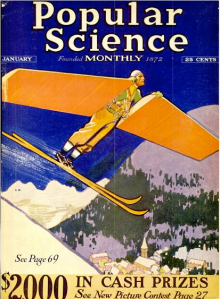 Another item that’s been circulating the blogosphere for a few days but is still worth posting: Popular Science magazine now has its archives online, dating all the way back to their very first issue. You can also browse them in Google Books. Some of those covers from the early to mid 20th century are quite hilarious.
If you watched the Oscars sunday night and are still wondering WTF was up with that crazy woman in the purple dress getting all Kaye West on Roger Ross Williams during his acceptance speech for Best Documentary Short, go read this article. In short, her name was Elinor Burkett, and she was a co-producer of the film. Apparently she and RRW have been in a battle over who’s idea the movie was, and who deserves the credit.
Some other Oscar-related goodness: Honest Best Picture Move Titles on CollegeHumor. My favorite: Up. Honest title- Suck It Dreamworks! 2nd favorite: Up In the Air. Honest title- George Clooney On Autopilot. (Via Kottke.org)
Buzz Aldrin continues his reign of utter awesomeness by being a contestant (participant?) on ABC’s Dancing With the Stars. He’s doing it as part of an overall effort to keep the US space program on the public’s mind. He also recently taped an upcoming appearance on NBC’s 30 Rock. I can only hope I’m that badass at 80. (Via Space.com)
In the past 10 years or so, I’ve become more and more of a skeptic. Especially in the last 5 or so years, the American public has become increasingly susceptible to scaremongering and inflated fears about health issues, doomsday nonsense, and other junk science that has no basis in reality. The myth about cell phone radiation causing brain cancer is one example of this. The flat truth is that there had been no proven link between cell phone use and brain cancer. In fact, according to Christopher Wanjek’s column on LiveScience there has been no significant increase in brain cancer that correlates in any way with the increase of cell phone usage. We all know how much cell phone usage has risen in the last 2 decades… if they cause brain cancer, why the hell hasn’t there been a corresponding increase in the disease? Because there’s no connection. That being said, this article on NewScientist is one of many covering research into the effects of cell phone radiation on the brain, and in fact it does affect brain tissue, and there have been some hints that extremely prolonged exposure could cause some degree of tissue damage, but tissue damage is not the same thing as brain cancer. Furthermore, another recent study actually showed that cell phone radiation reversed the effects of Alzheimer’s disease in mice! (And if you look at the bottom of that article, you’ll see that the study wasn’t funded by any cell phone companies…) We might even soon be seeing cell phone radiation used as a treatment for the disease. So, the jury may still be out on whether it causes tissue damage or has therapeutic effects on memory, but with as many studies as have been done on the link between the radiation and brain cancer, it’s pretty obvious that cell phones don’t cause brain cancer. Unfortunately some companies have tried to capitalize on the scaremongering by marketing products that are supposed to “protect” you brain from the radiation. These don’t work, and several have been shut down by the FTC.
Now that I’m off my skeptic soapbox, something actually interesting:
Biologists have discovered a species of sea slug that is the first know organism to be able to produce chlorophyll. This creature actually has aspects of both plants and animals, and thus sounds like something straight out of a sci-fi movie. But it’s real. Scientists have determined that it somehow “borrowed” the plant genes that allow chlorophyll production from the algae that it consumes. Exactly how it did that in it’s evolutionary path is still a mystery. It still can’t produce the actual chloroplasts (the cells that are responsible for the conversion of sunlight into energy) without consuming algae, but it apparently can produce chlorophyll entirely on its own.
And just for kicks: How the main LOST characters would each make a peanut butter & jelly sandwich. (Via Yewknee’d)
Static electricity/astronomy updates
January 6, 2010
January is often a time for lots of updates from the world of astronomy, because it’s when the American Astronomical Society has their yearly conference/meeting. This year’s is a big one, with lots of news regarding exoplanets. Unofortunately, no Earth-twins have been found yet but there are some other interesting stories from Kepler and many other sources. Some highlights so far:
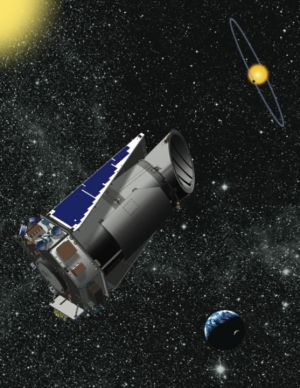 The Kepler mission has found its first batch of exoplanets, all of which are gas giants similar to Jupiter (though one is reportedly more like Neptune) orbiting very close to/quickly around their parent stars. It’ll be a few years before it finds anything else, because anything else takes a lot longer to orbit. Since Kepler is specifically looking for transiting planets (the planet passing directly between its parent star and us) it has to have 3-4 transits to be absolutely sure of its findings. Since planets like ours take a year or more to orbit… well, you do the math. It even found one gas giant that has the same approximate density as sytrofoam. (Via NASA and NewScientist)
Another interesting tidbit to come out this year is a much clearer picture of just how common solar systems like our own are in the universe/galaxy. According to astronomers from Ohio State University, who were heading up a larger collaborative effort called MicroFUN (micro-lensing follow-up network), about 10–15 percent of all stars have planet systems like ours (meaning a few gas giants orbiting far out, with probably a few small, rocky planets in closer). 10-15 percent may seem like a small number, but when you consider the overall vast number of stars just in our own galaxy alone, you’ll realize that even 10 percent equals hundreds of millions of solar systems. It should be quite obvious now that there are other worlds out there very similar to our own, we just haven’t found solid evidence of them yet, so we can’t be 100% sure. But I am confident the Kepler, the CoRoT mission, or maybe even a ground-based telescope, will find one within the next decade. (Via EurekAlert! and Space.com)
Here’s a little bit of everyday science for you:
We’ve all been annoyed when we get out of our cars or walk across a carpeted room in the winter time and shock the #&*$@! out of ourselves on the door/other metallic object. So why the hell does it always happen so much more in the winter? It has to do with the humidity. Especially in the eastern US, the winter months are much MUCH drier than the summer ones. (Remember that Relative Humidity is NOT a direct measurement of how much moisture is actually in the atmosphere, go by the dewpoint- the lower the dewpoint, the less moisture is in the air.) Colder air has less moisture capacity than does warmer air, thus the winter months are very dry. Well all know that static electricity is the buildup of an electric charge in our bodies and/or clothes due to simple friction. During the summer months when the air is more humid, the moisture in the air allows those charges to constantly dissipate because we all know water is a good conductor of electricity. The static electric charge never has a chance to build up because it’s constantly “seeping” away into the moist air. In the winter, the dry air does not conduct and “seep” away the static electric charge, allowing it to build up until we reach for something metallic such as a doorknob and POW! the electricity instantly discharges in one big spark and we get shocked.
Virgin Galactic’s SpaceShip Two/Alt medicine takes a hit
December 8, 2009
Yesterday Virgin Galactic revealed their SpaceShip Two to the public. This is officially the first publicly accessible spacecraft ever. For a pretty penny (about $200,000) you can book yourself a ride on this thing, and it will take you to the edge of space. You’ll experience about 5 minutes of virtual weightlessness. Check out this video animation showing the flight from launch to landing: (pardon the cheesy sound effects…)
I suppose it’s reasonable to hope that one day, during my lifetime, it will become affordable for the average individual to take spaceflights like these and experience such a humbling and inspiring sight as the earth from space….
I’ve always been a logical and reasonable person who respects the efforts of science and thorough research, however I do keep my mind open and understand that there’s a lot we don’t yet understand about all aspects of science. Medicine is a part of the scientific field of study. While this LiveScience article points out that many fields of “alternative medicine” have taken a beating this year, it’s important to note that most of the “treatments” they mention have been thoroughly dis-proven many times before, yet some people still continue to push these methods as legitimate treatment. I have to admit that I laughed a little after reading the section on Reiki. Anyone who believes that someone standing over them holding their hands above their head is going to heal their cancer is absolutely insane. Do these people still believe in Santa Claus? Or the tooth fairy? There’s a little thing called reality. Reality is testable and provable. And reality is all there is. Period. Please read that article if you have ever considered one of those “alternative treatments.” My own father is currently undergoing what some would call “alternative treatment” for early stages of prostate cancer, but what he’s doing (very specific dietary guidelines combined with some herbal supplements) has at least some proven results. It’s more of what you would call an “experimental treatment” that hasn’t been studied thoroughly enough to be accepted in the mainstream. I have nothing against this and of course hope the treatment works, but I also hope it will get more thorough research. But the treatments mentioned in that article have been debunked. They are total bullshit. If you believe in them you might as well believe the moon is made of cheese.
Life on Mars developments/H1N1 vaccine process
December 2, 2009
 Remember that meteorite from Mars that caused a huge stir back in 1996 when NASA announced that it thought it had found remnants of fossilized bacteria in it? If you don’t, just know that this meteorite, named the “Alan Hills meteorite,” had what we initially thought was a fossilized remnant of ancient Martian bacteria. But then some other scientists came forth with an equally plausible hypothesis for a non-microbial origin of the microscopic formation. So ever since then, the scientific community has been at odds, with one camp saying “Yes, it’s an ancient Martian microbe! There really was life on Mars!” and another camp saying “Nope. That formation wasn’t biological in origin.” But new technology has shed some light on the subject that wasn’t possible back then. Researchers at the Johnson Space Center have used more sophisticated High Resolution Electron Microscopy than was available in 1996 to study the meteorite, and their findings contradict the nay-sayers. So, if no new nay-saying hypotheses come out, then we can be pretty damn certain that microbial life once existed on Mars. AND it may even still exist there, under the surface! (Via Universe Today)
Kottke.org is one of longest-running blogs in existence, and it’s almost always full of random awesomeness. In this case, it’s all about the H1N1 vaccine, and how it and other vaccines are made. I had no idea it took soooo many chicken eggs. Do yourself a favor and read all about it.
Now here’s yet another hilarious comic from xkcd:

LHC has 1st collisions/Obama announces science ed campaign
November 24, 2009
Exciting news today in the world of science!

First, the Large Hadron Collider underwent several tests last week in which beams of protons were successfully circulated around the massive 17-mile installation. Those tests all pointed to a “go” for the first actual collisions, which happened yesterday. These collisions were still only tests, and nowhere near the full power needed to look for the elusive Higgs Boson. But with this first collision, the LHC is now officially the world’s biggest functioning particle colider. There’s still a lot of testing and preparation to do before they start doing the “real” experiments, but this is still very exciting. (Via Discovery News)
Secondly, yesterday also marked the kickoff of a new science education campaign by the Obama Administration. I can’t even describe how happy I am to know this is happening. It’s the best government-related news I’ve heard in a loooong time… probably since Obama won the election. I will echo Dr. Phil Plait’s sentiments that the following quote from Obama’s speech is a symphony to my ears: “We’re going to show young people how cool science can be.”
WIN. EPIC WIN. There may yet be hope for humanity.
dpBestflow/more 2012 debunking/Vatican admits possibility of E.T.
November 12, 2009
As you can see from this video, NASA is joining in on the fight against junk science and stupidity in general by putting some of their scientists into the public eye to debunk the 2012 doomsday B.S. This is the manager of their Near Earth Object tracking office. I’d say he’s a pretty good one to talk about doomsday scenarios, since his office is responsible for tracking asteroids and any other objects that might slam into our pale blue dot and kill us all. DON’T BELIEVE THE SCAREMONGERS! THERE IS NO REAL, CREDIBLE SCIENCE BEHIND ANY OF THE 2012 DOOMSDAY MYTHS! (Via Universe Today)
In other science news, apparently the Vatican is officially acknowledging the possibility of extra-terrestrial life. They recently had a week-long study/discussion involving over 30 scientists and religious experts to develop an official stance/policy/statement about the subject. This is kind of surprising, because we all know that most sects of Christianity don’t always agree with science/reality. Good job, Pope. (Via Physorg)
The American Society of Media Photographers (ASMP) has been working with the Library of Congress for the past couple of years to create a huge online resource for photography info. They just launched it, and I can’t even begin to describe how awesome dpBestflow is. Find some downtime, and go check it out if you’re at all interested in photography. They’ve compiled loads of industry knowledge, standards, and general information, and it’s all in one place, for free. Basically, it’s everything you could possibly want to know about the profession of digital photography, all in one place. (Via Photo Business & News Forum)

 steve cross loves music and science